
REVIEW · OLD TOWN AND HISTORIC SEGWAY TOURS
History & Culture Tour in Honolulu via Segway
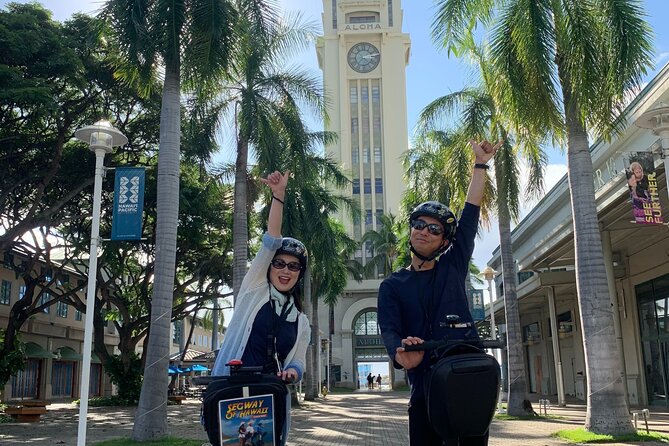
See Honolulu beyond the beach. This 2.5-hour Segway tour covers royal landmarks, old government buildings, Chinatown, Honolulu Harbor, and Kaka’ako Waterfront Park without asking you to walk the whole way. I like the small groups of no more than eight and the radio headsets, which let you hear your guide clearly while moving through town.
I also like how much ground the route covers. You visit places tied to Hawaiian royalty, the overthrow of Queen Lili’uokalani’s government, Honolulu’s port, and the city’s multicultural center in one morning. The main drawback is the price, $254.14 per person, which is a serious spend for a short tour, especially once you add the optional $20 Waikiki transfer and guide gratuity.
The tour earns its strongest praise for its guides. Jeanne, Michael, Zach, and Allen are singled out for clear explanations, patient instruction, and a talent for adjusting the pace to the group. If you have never used a Segway, that matters. The equipment looks a little intimidating at first, but the experience includes a safety briefing and several first-time riders found it easy to learn.
Key points to know before booking
- You cover central Honolulu quickly: The route links Mission Houses, Iolani Palace, Chinatown, Aloha Tower, and Kaka’ako in one continuous ride.
- The group is capped at eight people: This gives your guide room to answer questions and keep an eye on new riders.
- Jeanne, Michael, Zach, and Allen receive especially warm praise: Their humor, patience, photography help, and local knowledge are central to the experience.
- The tour begins at 9:00 a.m. in Kaka’ako: Waikiki pickup is available from four locations for an extra $20 per person round trip.
- Headsets and two-way radios make a real difference: You can listen to the guide while riding in single file rather than stopping at every corner.
- The price pays for coverage and personal attention, not a budget outing: It makes the most sense if you value a private-feeling group and want to see many historic areas in limited time.
Why a Segway works well in Honolulu
A walking tour of central Honolulu can become tiring in the heat, especially when it combines downtown streets, palace grounds, harbor views, and the waterfront. The Segway lets you move between these areas with less effort. You still stop often, but the ride connects the stops instead of turning the day into a long pavement march.
I like the balance between movement and explanation. You are not simply gliding past buildings while a guide recites dates. The route pauses at important places, then uses the Segway to carry you to the next part of the story. Headsets and two-way radios help keep the group together, and the small size means you can ask questions without shouting across a crowd.
The route is also useful for seeing how Honolulu changed over time. You move from missionary-era buildings to the royal government, then to modern state offices, immigrant-era Chinatown, the harbor, and the newer public spaces of Kaka’ako. That broad sweep gives the morning a clear purpose.
Still, you should be comfortable with the basic demands of riding. The route takes place in public areas, and the group travels in single file. If you prefer a slow walking pace, indoor museum time, or long stops at each site, this may feel too active. The appeal is seeing more places, not spending an hour inside one building.
More Old Town Segway Tours in the USA
- 60-Minute Guided Segway History Tour of Savannah
★ 5.0 · 1,163 reviews - 90 Minute Historic Uptown Neighborhood Segway Tour of Charlotte
★ 5.0 · 917 reviews - 2 Hour Scottsdale Segway Tours – Ultimate Old Town Exploration
★ 5.0 · 433 reviews
Mission Houses and Kawaiahao Church set the tone

The first major stop is the Mission Houses, built in 1820 by Hawaii’s first missionaries. The buildings are austere, which is part of their value. They offer a look at the early American and Christian influence that reshaped Honolulu during the nineteenth century.
Next door, Kawaiahao Church dates from the same year. The church and its graveyard connect the missionary period with Hawaii’s ruling families, since former ali’i, or Hawaiian royalty, are buried there. This is an important early lesson in how religion, government, and royal life became closely linked.
Across King Street, you can also see Honolulu Hale, the city hall. You may find this stop less visually dramatic than the palace grounds, but it helps place the old religious center within the working city of Honolulu today. Your guide’s commentary is especially useful here because the buildings can look quiet and simple if you do not know their place in the story.
The King Kamehameha Statue and former government center
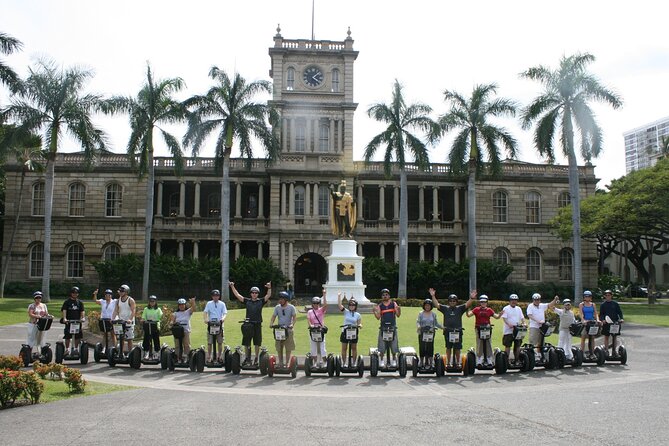
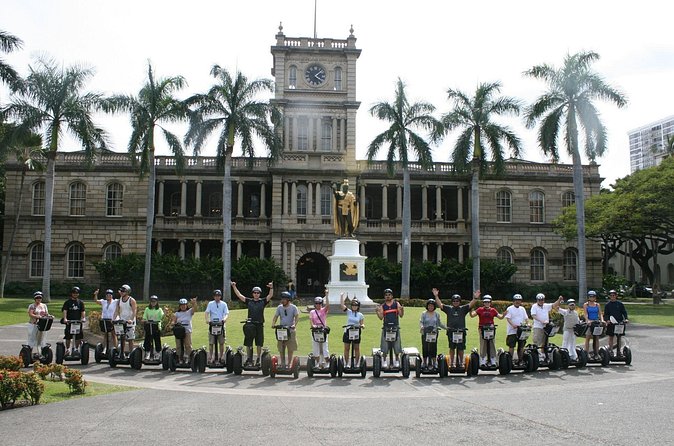
The gold-encrusted King Kamehameha Statue is one of the tour’s natural photo stops. It honors the ruler who united the Hawaiian Islands, and the statue’s location makes the setting even more meaningful.
It faces the Hawaii State Supreme Court building, a structure that once served as the seat of Hawaii’s government when the islands were an independent nation. This pairing gives you a concise lesson in political change: a Hawaiian king in front of a building connected to the country’s former government and its modern legal system.
The stop is brief, but it carries a lot of weight. I appreciate that the tour does not treat the statue as just another postcard image. The story of Hawaiian sovereignty continues through the later stops, especially at Iolani Palace and the Queen Lili’uokalani Statue.
Iolani Palace and Queen Lili’uokalani’s story
The group crosses King Street and enters the grounds of Iolani Palace, the only palace on American soil built by a reigning king. King Kalakaua commissioned the palace, and it is now a museum. The tour glides around the exterior rather than providing a full interior palace visit, so you should not book this experience if an indoor palace tour is your main goal.
The grounds still offer plenty to see. Banyan trees add shade and character, while the Royal Barracks gives more context about the people and institutions surrounding the monarchy. The stop at the statue of Queen Lili’uokalani is one of the most important points on the route.
Queen Lili’uokalani was Hawaii’s last ruling monarch. Her government was overthrown by Americans, a fact that cannot be reduced to a quick sightseeing note. A good guide helps you understand that these sites are connected to a living and sometimes painful part of Hawaiian history. The tour’s focus on the monarchy gives the morning more depth than a simple ride through downtown.
More old town segway tours around the USA:
- 90-Minute Segway History Tour of Savannah
★ 5.0 · 365 reviews - 2.5hr Guided Segway Tour of Historic Atlanta
★ 5.0 · 311 reviews - Historic Downtown Savannah: Guided Segway Tour
★ 4.9 · 276 reviews - Segway Tour of Historic San Antonio
★ 5.0 · 234 reviews
The State Capitol and Hotel Street
Behind the palace, the route continues to Hawaii’s State Capitol Building. Its unusual architecture gives you a visual change after the older royal and missionary sites. The building also brings the story forward into the modern state government.
From there, you pass the Hawaii State Art Museum and travel along historic Hotel Street. Hotel Street has a colorful past, and the guide’s explanation helps connect the street’s present appearance with the many uses and communities that shaped it.
This portion is a good example of why the radio system matters. You can listen while riding, then pause when the guide points out a building or detail. Without the headset, some of the commentary could be lost in traffic and city noise.
Chinatown brings a different side of Honolulu
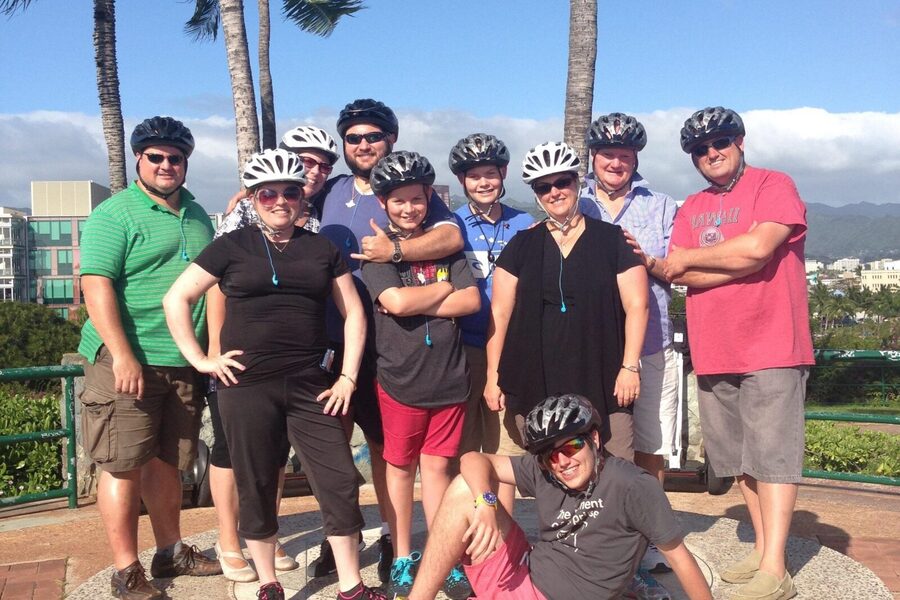
The ride continues into Chinatown Shopping Mall, where you can see noodle factories, open markets, and a mix of people from around the world. This section changes the focus from royal Honolulu to the working, commercial city built by immigrants and local communities.
You will not get a full food tour or a long market visit. Instead, the Segway gives you a moving introduction to the area. That is useful if your schedule is tight and you want to identify places to revisit later on foot.
Chinatown may also feel less polished than the palace district. That is part of what makes it worthwhile, but it means the tour is not a string of carefully staged attractions. You are seeing an active part of the city, with all the noise and uneven edges that come with it.
Merchant Street, Bishop Street, and old transportation buildings
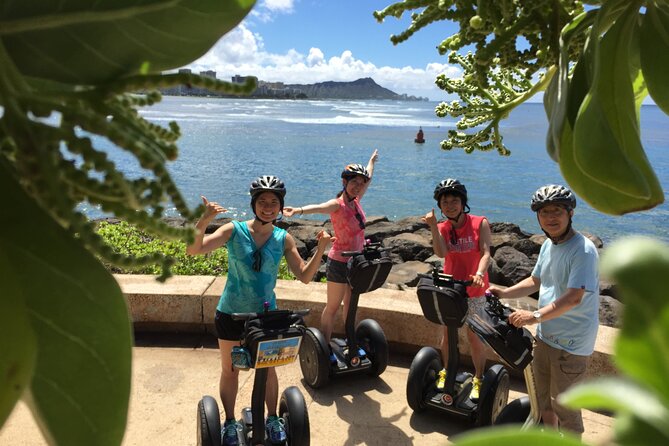
The route then reaches Bishop Street, described as Honolulu’s Wall Street, and follows Merchant Street, one of the first paved streets in the city. The historic buildings here tell a different story from the royal sites. Commerce, shipping, finance, and transportation helped turn Honolulu into a regional center.
You also see transportation buildings more than 150 years old. These stops may appeal most to people who enjoy urban history and architecture. They help explain how Honolulu functioned as a port city rather than simply a capital with a palace at its center.
This is another place where the Segway earns its keep. You can link several streets and buildings that would feel scattered on foot. The tradeoff is that you need to keep moving and pay attention to the guide while riding.
Aloha Tower and Honolulu Harbor
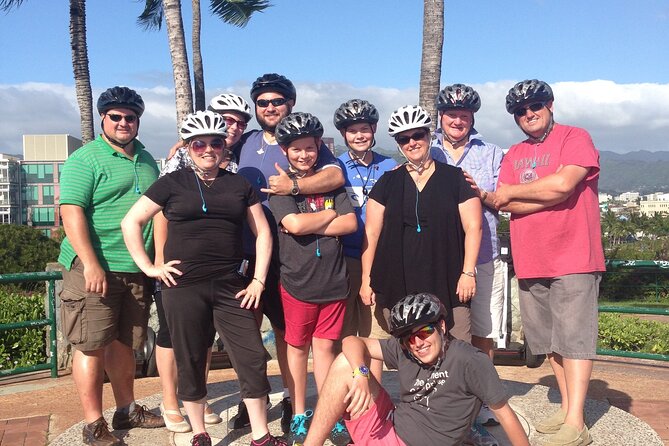
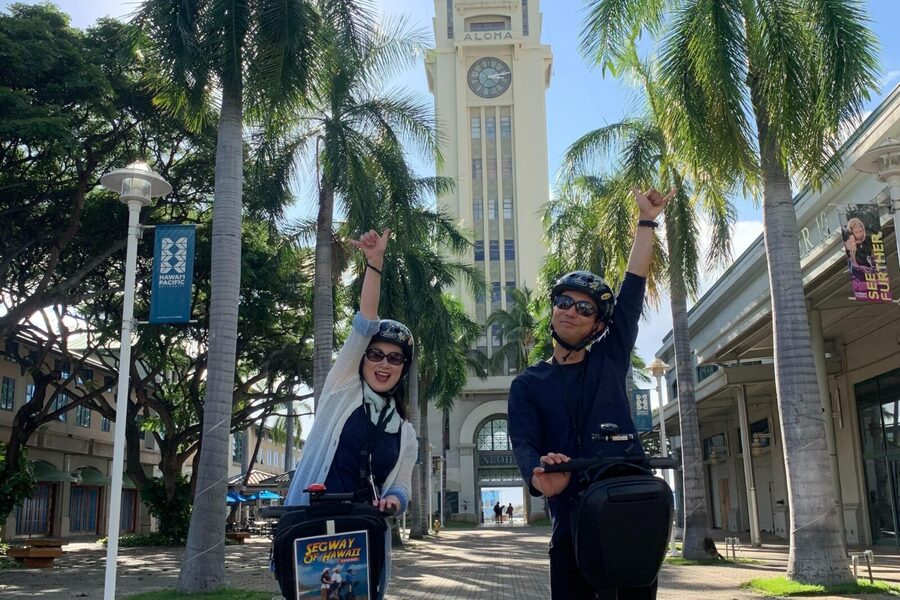
At Honolulu Harbor, the route reaches Aloha Tower. When it was built in 1926, it was the tallest building in Hawaii. The tower’s importance came from its role as a welcoming marker for ships entering the harbor, making it a fitting stop on a tour that keeps returning to Honolulu’s connection with the sea.
The route also includes a restored coral reef and fish that come close to feed. This adds a natural element to a morning otherwise focused on buildings, government, and urban history. It is a short reminder that the harbor is not only a working waterfront.
You should not expect a boat excursion or a long wildlife session here. The value is in seeing the harbor as part of the city’s past and present, then continuing the ride along the water.
Kaka’ako Waterfront Park and the final ocean ride
The tour heads toward Kaka’ako Waterfront Park, following its promenade and passing Point Panic, where you can watch surfers. The ocean views provide a welcome change after the downtown streets.
The route also climbs a hill to the Ehime Maru Memorial and the Echo Stone. These stops add modern memorial and cultural meaning to the tour. They are less familiar to many first-time visitors than Iolani Palace, which makes the guide’s explanation especially helpful.
The final stretch returns toward the starting point along the ocean through Ala Moana Regional Beach Park. It is a pleasant finish, and the open waterfront gives you time to enjoy the ride without another dense cluster of buildings to absorb.
Price, group size, and what you receive
At $254.14 per person, this is not an inexpensive way to sightsee. You are paying for a 2.5-hour guided experience, Segway equipment, a helmet, bottled water, radio communication, and a group limited to eight people. The personal attention can justify the price if you want a private-feeling introduction to Honolulu and do not want to plan a route yourself.
The cost is harder to defend if you are mainly looking for transportation or a quick photo tour. Many stops are viewed from the outside, and the tour does not include a full indoor visit to Iolani Palace or the Mission Houses.
Waikiki pickup costs another $20 per person for the round trip. There are four pickup locations in Waikiki, but you need to contact Segway of Hawaii in Kaka’ako to schedule it. Otherwise, meet at Segway of Hawaii, StoreKeeer Building, 1687 Kalauokalani Way, Honolulu, at 9:00 a.m.
The tour is offered in English. Most people can participate, and the small group helps the guide provide extra support. Several first-time riders found the instruction reassuring, while experienced Segway users praised the pace and the amount of ground covered.
Who should book this Honolulu tour?
I would choose this for a history-minded visitor who wants more than Waikiki but does not want to spend a full day walking downtown. It also suits repeat visitors who have seen the beaches and want to understand the city’s royal, political, commercial, and maritime past.
Families and mixed-age groups may appreciate the vehicle-assisted route, but everyone should be willing to ride in a public setting and follow the guide’s instructions. If you are nervous about the equipment, the examples from first-time riders are encouraging, and guides such as Michael and Zach are praised for making the introduction comfortable.
I would skip it if you dislike balancing equipment, want a deep interior museum visit, or need a very low-cost activity. You should also keep the weather in mind. The tour can be canceled in poor weather or if the minimum number of participants is not met. You can cancel for a full refund up to 24 hours before the start time, but late cancellations are not refunded.
Should you book it?
Book this tour if you want to cover a wide slice of Honolulu in one morning and value a guide who can connect the sites into one story. The best reasons to choose it are the small group, the radio system, the range of historic districts, and the consistently warm praise for guides including Jeanne, Michael, Zach, and Allen.
The price is high, so I would compare it with the cost of separate walking tours, museum visits, and transportation around downtown. But if your time is short, your feet need a break, and Hawaiian history is a priority, the Segway format gives you an efficient and enjoyable way to see the city.
FAQ
How long is the Honolulu Segway history tour?
The tour lasts approximately 2 hours and 30 minutes.
What time does the tour start?
The tour begins at 9:00 a.m.
Where does the tour begin and end?
It begins and ends at Segway of Hawaii in the StoreKeeer Building, 1687 Kalauokalani Way, Honolulu, Hawaii 96814.
Is transportation available from Waikiki?
Yes. Round-trip transportation from Waikiki is available from four pickup locations for $20 per person. You need to contact Segway of Hawaii in Kaka’ako to schedule it.
How many people can join the tour?
The maximum group size is eight people.
Is the tour offered in English?
Yes. The tour is offered in English.
What equipment is included?
The tour includes a colorful helmet, a two-way radio headset, and bottled water.
Is gratuity included in the price?
No. Gratuity for the guide is not included and is appreciated.
Can first-time Segway riders join?
Most people can participate, and several first-time riders found the instruction helpful and reassuring. The tour includes guide support and radio communication.
What happens if the weather is poor?
The experience may be canceled because of poor weather. You will then be offered another date or a full refund.
Just added around the USA
- Cave Point & Whitefish Dunes State Park Segway Tour★ 5.0 · 3 reviews
- Manitowoc Shore Segway Tour w/ Private Tour Option★ 5.0 · 2 reviews
- Sturgeon Bay Canal City Segway Tour w/ Private Tour Option★ 4.5 · 4 reviews
- Cave Point/Whitefish Dunes Segway Tour★ 4.5 · 13 reviews
- Saint Petersburg Scenic Segway Tour★ 5.0 · 39 reviews
- Savannah Bonaventure Cemetery Segway Tour★ 5.0 · 14 reviews
- San Diego Segway Tour★ 5.0 · 7 reviews
- Private Segway Experience Through La Jolla★ 5.0 · 8 reviews
Old Town and Historic Segway Tours, compared.
60-Minute Guided Segway History Tour of Savannah
Read our review →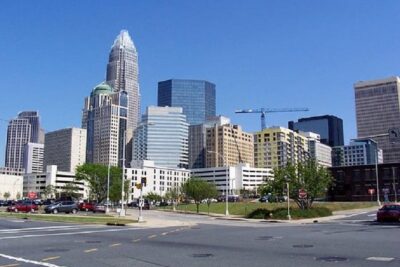
90 Minute Historic Uptown Neighborhood Segway Tour of Charlotte
Read our review →

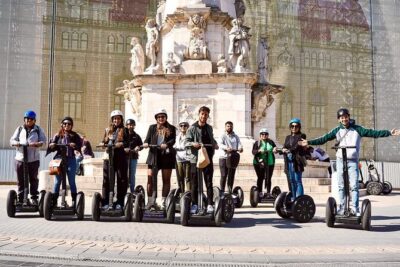
1.5 Hour Budapest Segway Tour – To The Castle Area
Read our review →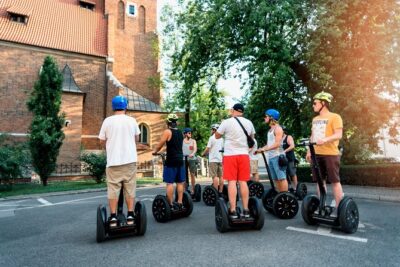
Krakow Old Town Segway Tour 2hr with Training, Safety Gear, Guide
Read our review →
2 Hour Scottsdale Segway Tours – Ultimate Old Town Exploration
Read our review →
Browse the lists this tour appears in