
REVIEW · OLD TOWN AND HISTORIC SEGWAY TOURS
2.5hr Guided Segway Tour of Historic Atlanta
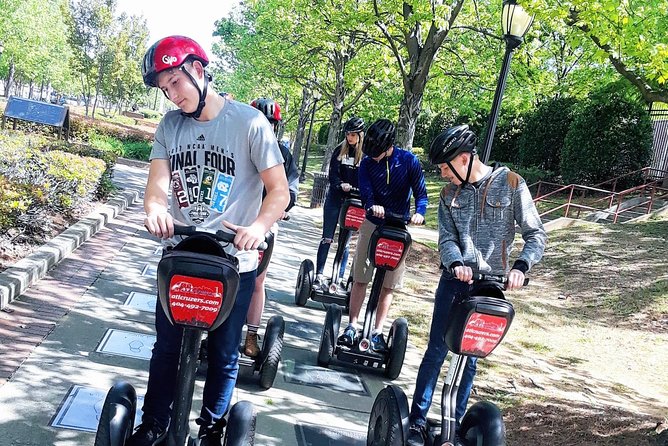
Atlanta rolls better on two wheels. This 2.5-hour guided Segway tour links the city’s civil rights landmarks, old neighborhoods, BeltLine projects, and skyline viewpoints in one compact route. I especially like the careful 15-to-30-minute training session and the way guides such as Jet, Jett, Jeremy, and Steve mix city facts with friendly road guidance. The main thing to consider is that the tour moves through city streets and requires balance, suitable shoes, and a weight between 100 and 260 pounds.
I also like the small-group limit of 16 people, which gives the guide room to watch the group and point out hazards. At $69 per person, the tour offers a lively way to cover more ground than a walking tour, though the brief stops at major historic sites are better for orientation than full visits.
Key things to know before you roll

- Training comes first: You receive hands-on instruction before leaving the downtown meeting point, making this a reasonable first Segway ride.
- The route covers four very different neighborhoods: Cabbagetown, Inman Park, Old Fourth Ward, and Downtown each show a different side of Atlanta.
- Civil rights history is part of the ride: Ebenezer Baptist Church and the Martin Luther King Jr. National Historic Site are important stops.
- Krog Street Market provides a useful pause: The route includes about 10 minutes for a quick drink or bite.
- The Jackson Street Bridge is the photo stop: You can pose with the downtown skyline behind you.
- Good weather matters: Wear flat, closed-toed shoes, skip loose clothing and flip-flops, and bring sun protection.
Why a Segway works well in Atlanta
Atlanta is spread out, and its major sights do not always sit in one easy walking loop. A bus can cover distance, but you lose the street-level feel. Walking gives you atmosphere, but fitting Cabbagetown, Inman Park, Oakland Cemetery, the King site, and the BeltLine into one morning would be a workout.
A Segway fills that gap. You travel slowly enough to see murals, houses, churches, and changing neighborhoods, yet quickly enough to cover a broad section of central Atlanta. You are also outdoors for most of the tour, which makes the city feel more immediate than it does through a vehicle window.
The ride begins at 160 Ted Turner Drive NW in Downtown Atlanta and returns to the same spot. The listed start time is 10:00 a.m., and the full outing takes about two and a half hours, including training and stops. That timing makes it a useful first activity for a day in Atlanta, especially if you want a broad introduction before choosing which areas deserve a longer visit.
The $69 price is fair for a guided small-group tour with equipment, instruction, local commentary, and a route that covers several districts. It is not the cheapest way to see Atlanta, but you are paying for transportation, a guide, and the chance to cover more ground without joining a large bus group.
More Old Town Segway Tours in the USA
- 60-Minute Guided Segway History Tour of Savannah
★ 5.0 · 1,163 reviews - 90 Minute Historic Uptown Neighborhood Segway Tour of Charlotte
★ 5.0 · 917 reviews - 2 Hour Scottsdale Segway Tours – Ultimate Old Town Exploration
★ 5.0 · 433 reviews
The training session determines your morning
If you have never used a Segway, the first part may feel more important than the sightseeing. The guide spends roughly 15 to 30 minutes showing you how to mount, move, turn, stop, and handle the machine. That time is well spent because the tour later passes through streets, paths, and areas where you need to pay attention.
The strongest praise goes to the instruction. Jet and Jett are repeatedly singled out for calm, clear teaching, while Jeremy is described as patient with first-time riders. One particularly useful detail from the feedback is that guides actively point out obstacles in the road instead of leaving you to spot every uneven patch yourself.
That does not make the tour effortless. You still need to listen, keep your balance, and follow directions. Several riders began nervous and became comfortable after practice, but anyone worried about balance should take the training seriously rather than treating it as a quick formality.
You must be at least 14 years old, and anyone under 18 needs to be accompanied by an adult. The stated weight range is 100 to 260 pounds. Pregnant participants cannot join because of the risk of falling. Wear flat, closed-toed shoes, and avoid flip-flops, scarves, or loose clothing that could get in the way. A hat, sunscreen, and sunglasses are sensible in Atlanta’s bright weather.
Ebenezer Baptist Church and Atlanta’s civil rights story
The first major history stop is Ebenezer Baptist Church, where Martin Luther King Jr. was baptized and where he and his father served as pastors. The church was also led by King’s grandfather, giving the site a multigenerational connection to the family and to Atlanta’s Black religious life.
The stop itself is short, listed at about three minutes, so you should not expect a full church tour. Its value comes from seeing the place in context and hearing the guide explain why this church mattered to King’s family and the wider civil rights movement.
The nearby Martin Luther King Jr. National Historic Site adds another layer. The area includes King’s childhood home and the original Ebenezer Baptist Church, along with his story from childhood through his death and burial. The tour stop is also brief, around five minutes, so treat it as an introduction rather than a substitute for a longer visit to the national historic site.
I like this part of the route because the subject is handled in a physical place, not as a detached lecture. You are riding through the Old Fourth Ward, seeing the streets connected to King’s early life, and receiving enough context to decide if you want to return on foot.
Oakland Cemetery puts the skyline beside Atlanta’s past
Oakland Cemetery is one of the most appealing stops because it gives you both a quiet green setting and a wide view toward Downtown Atlanta. It is the city’s oldest cemetery and the final resting place of figures including Mayor Maynard Jackson, author Margaret Mitchell, golfer Bobby Jones, Civil War soldiers, and country singer Kenny Rogers.
The tour allows only about three minutes here, so the stop is mainly about the setting, the stories, and the skyline view. If you want to study graves, monuments, or garden details, you will need another visit.
Still, this is a clever place to pause. The leafy cemetery offers a sharp contrast to the city streets, and the view helps you understand Atlanta’s shape. It also gives the route a change of pace before the ride continues through nearby neighborhoods.
More old town segway tours around the USA:
- 90-Minute Segway History Tour of Savannah
★ 5.0 · 365 reviews - Historic Downtown Savannah: Guided Segway Tour
★ 4.9 · 276 reviews - Segway Tour of Historic San Antonio
★ 5.0 · 234 reviews - 2-Hour Historic Dallas Segway Tour
★ 5.0 · 225 reviews
Cabbagetown brings murals and mill-town character
The route passes through Cabbagetown, a former mill town now known for art, food, and colorful public murals. The neighborhood gives you a look at Atlanta’s industrial past and its later creative reuse.
One featured sight is Forward Warrior, described as one of the city’s largest public mural projects. You may find this section especially enjoyable if you like seeing how older working neighborhoods change without losing every trace of their earlier identity.
The tour does not promise a long food stop in Cabbagetown itself. Instead, it later pauses at Krog Street Market. Keep that distinction in mind if you are expecting time to browse restaurants or shop along the route. You will see the neighborhood from the Segway, but the schedule is built around movement rather than extended wandering.
Inman Park mixes Victorian homes with Civil War history
Inman Park was Atlanta’s first planned community and was established in 1890. It is also often described as one of the first garden suburbs in the United States, with older Victorian homes and leafy streets that feel very different from Downtown.
The guide points out historic houses, including the home of Coca-Cola founder Asa Candler. The neighborhood also sits on ground connected to the 1864 Battle of Atlanta, adding a military chapter to an area now known for residential streets.
This is where the Segway has a practical advantage. You can glide past a string of houses and absorb the overall character without stopping at every corner. The listed stop is only about two minutes, so the guide will likely focus on a few clear details rather than a house-by-house architectural lesson.
The BeltLine shows Atlanta changing in real time
The Atlanta BeltLine Eastside Trail is one of the tour’s most useful modern stops. The project repurposes a former railway corridor around the city core as a route for walking, cycling, public art, and redevelopment.
You see the BeltLine not as an isolated attraction but as a working piece of Atlanta’s future. The guide explains how an old rail corridor is being adapted for city life, and the ride lets you connect several neighborhoods that were once more separate from one another.
This section also brings the midway break at Krog Street Market, described as Atlanta’s oldest food hall. You get about 10 minutes to grab a quick bite or drink. That is enough for a short refreshment stop, not a leisurely meal, so plan your expectations accordingly.
Krog Street Market is a practical pause because Segway riding requires attention and posture. A brief break can help you reset before the final part of the route. If you want to eat properly, do it before or after the tour rather than counting on this stop for lunch.
Jackson Street Bridge delivers the clearest photo
The Jackson Street Bridge is the route’s main photo opportunity. From here, you can frame Downtown Atlanta’s skyline, and the guide stops for a group picture with the buildings behind you.
This is a good example of a short stop that earns its place. You do not need a long lecture to appreciate the view, and the photo gives you a visual record of how far the route has taken you.
The schedule lists about five minutes here. That should be enough for pictures, but not for a long pause or repeated solo shots. Have your camera ready, follow the guide’s instructions, and remember that the group needs to stay together.
Downtown closes the loop
The tour returns through Downtown, including a pass by Georgia’s largest educational institution in the heart of the city. The supplied details do not name the institution, so you should treat this as a passing point rather than a dedicated visit.
Downtown provides a useful final contrast with the older neighborhoods. By this stage, you have seen Atlanta’s civic center, historic churches, Victorian homes, a former mill district, a cemetery, a rail-to-trail project, and a modern skyline view. The ride closes back at the original meeting point, leaving you with a broad sense of how the city’s past and present fit together.
The route is not a complete tour of Atlanta. Midtown coverage appears in some guide-led versions of the experience, but the main description focuses on Downtown and east-side neighborhoods. If Midtown is your priority, confirm the day’s route before booking.
Guides make the difference
The guide is central to the quality of this tour because the route itself is only part of the product. You need someone who can explain history in short bursts, control a group on the move, and notice when a first-time rider needs help.
Jet and Jett receive especially strong praise for being funny, attentive, and reassuring during training. Jeremy is noted for patience, and Steve is credited with keeping the information interesting while adding local observations along the way.
The best comments focus on safety without making the ride feel stiff. Guides point out obstacles, watch the group, and wait until riders feel ready to continue. That matters more than a long list of facts. A perfect speech does not help if you are tense or unsure how to stop.
Guide quality can vary by departure, of course. The high rating of 4.9 from 311 reviews and the 99 percent recommendation rate suggest a strong overall record, but two serious complaints involve cancellations and delayed refunds. Those comments do not describe the ride itself, yet they are worth keeping in mind when planning around a flight or tight schedule.
Who will enjoy this tour most
I would choose this tour if you want a lively first look at Atlanta and do not mind learning a new vehicle. It suits active adults, families with teenagers aged 14 and up, couples, and older riders who are comfortable standing and balancing. Several riders in their early 60s found it enjoyable, so you do not need to be young or athletic in the usual sense.
It is less suitable if you want long museum visits, quiet independent exploration, or a deep look at one site. The historic stops are short, and the tour keeps moving.
Book at least a little ahead if your dates are fixed. The experience is booked about 12 days in advance on average, which suggests that popular dates can fill before your visit. Since good weather is required, keep your clothing flexible and understand that poor conditions may lead to a new date or a full refund.
You can cancel for a full refund up to 24 hours before the start time. Within 24 hours, changes and refunds are not accepted under the stated policy.
Should you book the Atlanta Segway tour?
Book it if you want to cover several important parts of Atlanta in one morning and prefer street-level sightseeing to a bus. The strongest reasons are the careful training, small group size, excellent guide feedback, civil rights landmarks, BeltLine access, and skyline photography.
Skip it if you dislike balancing devices, need extended time at historic sites, or have a strict schedule that cannot tolerate a weather cancellation. At $69, I consider it good value for a guided overview, especially for a first visit. Just think of it as a moving introduction to Atlanta, not a replacement for returning on foot to the King historic site, Oakland Cemetery, or Krog Street Market.
FAQ
How long does the Segway tour last?
The tour lasts approximately two and a half hours, including a 15-to-30-minute training session before the ride begins.
Where does the tour start and finish?
It starts at 160 Ted Turner Drive NW in Atlanta and ends back at the same meeting point.
What time does the tour start?
The listed start time is 10:00 a.m.
Do I need previous Segway experience?
No. Previous experience is not required, and the tour includes a training session before leaving the meeting point.
What is the minimum age?
The minimum age is 14. Children must be accompanied by an adult.
What should I wear?
Wear weather-appropriate clothing and flat, closed-toed shoes. Flip-flops and loose or hanging clothing are not allowed. A hat, sunscreen, and sunglasses are recommended.
What happens if bad weather cancels the tour?
If poor weather causes a cancellation, you will be offered another date or a full refund.
Just added around the USA
- Cave Point & Whitefish Dunes State Park Segway Tour★ 5.0 · 3 reviews
- Manitowoc Shore Segway Tour w/ Private Tour Option★ 5.0 · 2 reviews
- Cave Point/Whitefish Dunes Segway Tour★ 4.5 · 13 reviews
- Sturgeon Bay Canal City Segway Tour w/ Private Tour Option★ 4.5 · 4 reviews
- Saint Petersburg Scenic Segway Tour★ 5.0 · 39 reviews
- Savannah Bonaventure Cemetery Segway Tour★ 5.0 · 14 reviews
- San Diego Segway Tour★ 5.0 · 7 reviews
- Private Segway Experience Through La Jolla★ 5.0 · 8 reviews
Old Town and Historic Segway Tours, compared.

60-Minute Guided Segway History Tour of Savannah
Read our review →
90 Minute Historic Uptown Neighborhood Segway Tour of Charlotte
Read our review →

1.5 Hour Budapest Segway Tour – To The Castle Area
Read our review →
Krakow Old Town Segway Tour 2hr with Training, Safety Gear, Guide
Read our review →
2 Hour Scottsdale Segway Tours – Ultimate Old Town Exploration
Read our review →
Browse the lists this tour appears in