
REVIEW · BARCELONA SEGWAY TOURS
Barcelona Segway Tour
Barcelona rolls by quickly here. This 2-hour Segway tour links Arc de Triomf, the Old Town, Port Vell, Barceloneta, and the Olympic Village without asking you to spend the whole afternoon on foot. I like the mix of historic streets, waterfront views, Roman and medieval sights, and the city’s modern 22@ district.
I also like the small-group format, with two to six people per guide, and the patient instruction for first-time riders. Guides such as Ruslan, Pablo, Maria, Stephan, and Daniel receive repeated praise for keeping the ride safe, friendly, and easy to follow. The main drawback is practical: Segway riders must be at least 16, and the activity is not suitable for pregnant people or anyone with mobility limitations.
Barcelona Segway Tour at a glance

- Arc de Triomf starting point: Meet at Passeig de Lluís Companys, beside Parc de la Ciutadella, a handy spot near several major sights.
- A broad city route: Ride from the Old Town and royal shipyards to Columbus Monument, La Rambla, Barceloneta, and Vila Olímpica.
- Small groups: Two to six people per guide help the tour feel personal and make it easier to keep beginners together.
- Good for first-time riders: Training, a helmet, safety equipment, insurance, and a drink are included.
- Segway or electric bike: Participants under 16 can join on high-end electric bicycles at discounted rates.
- Strong value at $32: You cover a lot of ground in two hours, with a guide adding local context along the way.
Why this tour works well for seeing Barcelona
Barcelona can be tiring to cover on foot. The central sights are spread across several districts, and the route from the old harbor to the beach is long enough that you may not want to walk both ways. A Segway gives you a simple way to connect these areas while still moving slowly enough to see what is around you.
The route is especially useful early in a visit. You get a quick sense of how the Arc de Triomf area, Born, Port Vell, Barceloneta, and the Olympic waterfront fit together. I would use it as a way to get your bearings, then return later to the places that deserve more time.
The tour is not a deep visit inside major monuments. You stop for views and explanations, but the format is about seeing many areas rather than entering museums or spending long periods at one landmark. That is the trade-off, and it is a fair one for two hours.
The price is $32 per person, which is reasonable for a guided city activity that includes the vehicle, instruction, safety gear, helmet, insurance, and one drink. A self-guided walk costs less, of course, but it will not cover this much ground so quickly or give you a guide to help with the Segway.
A few more segway tours around Barcelona worth a look
- Barcelona Segway Tour
★ 5.0 · 680 reviews - Barcelona: City Highlights Guided Segway Tour
★ 4.9 · 624 reviews - Barcelona: 2-Hour City Sights Guided Segway Tour
★ 4.9 · 610 reviews
Getting started beside Arc de Triomf
You meet the guide at the activity provider’s office on Passeig de Lluís Companys, at number 10. The location puts you beside Arc de Triomf and close to Parc de la Ciutadella, so the tour begins in one of Barcelona’s most attractive public spaces.
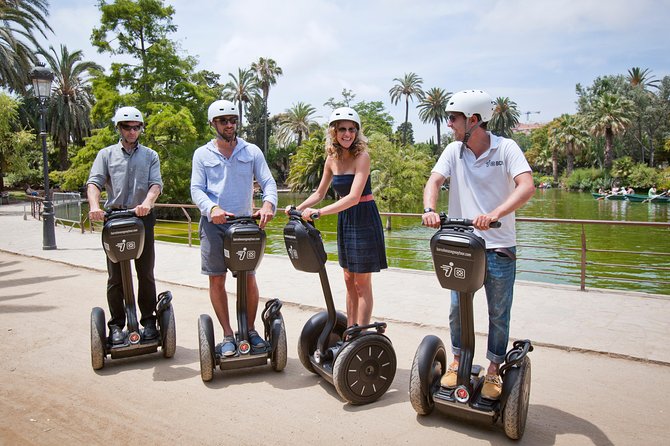
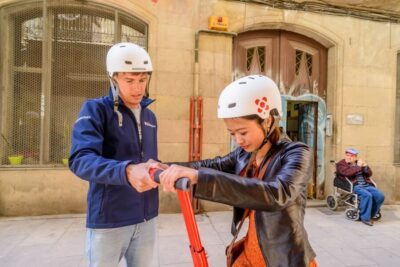
Expect a short introduction to the Segway i2, followed by practice. This matters if you have never used one. Several riders describe feeling nervous at first, then becoming comfortable after the instruction and a few minutes of practice. The machine responds to your body movements, so you need to lean and balance rather than steer it like a bicycle.
The guide’s attitude makes a real difference here. Stephan, Daniel, Paolo, and Ruslan are praised for patience with beginners, while Maria is singled out for looking after groups carefully. You should feel free to say if you need more practice before setting off. The small groups make that request easier than it would be on a large city tour.
You need to stand at least 110 centimeters tall and weigh between 35 and 120.20 kilograms, or about 265 pounds. You must also be able to make movements similar to climbing and descending stairs without help. Wear comfortable clothes and shoes. In winter, bring warm, water-resistant clothing and gloves.
Arc de Triomf and Parc de la Ciutadella
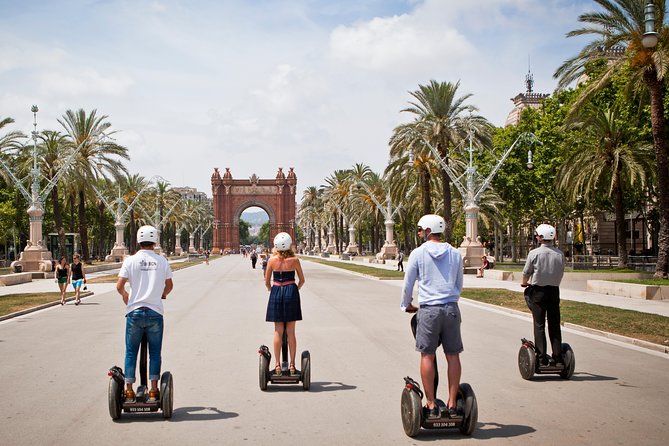
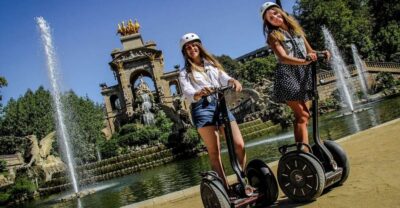
Arc de Triomf is more than a convenient meeting point. Its broad promenade gives the tour a pleasant opening, with space to get used to moving together before reaching tighter streets. The brick monument was built for the 1888 Barcelona Universal Exposition, and its reddish stonework makes a strong first photo stop.
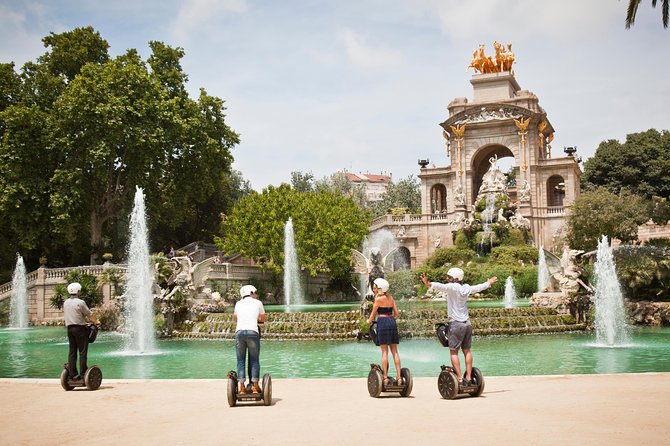
From here, you move toward Parc de la Ciutadella. The park occupies the former site of a military citadel and remains one of the city’s best places for open space, gardens, and public life. The route may include a little free time and a chance to take photographs, but do not expect a long park visit.
This first section is useful because it eases you into the activity. You are learning the controls while passing through a place with room to maneuver. The drawback is that the park and arch are quick highlights, not full sightseeing stops.
El Born, Santa Maria del Mar, and Estació de França
The Born Quarter gives the tour a change of mood. Here, wide open spaces give way to older streets, handsome facades, and a district shaped by trade, religion, and the sea. You pass near Santa Maria del Mar, the striking Gothic church often called the Cathedral of the Sea.
The route also includes Estació de França, one of Barcelona’s notable railway stations. Its grand interior is not the focus of this ride, but the stop helps connect the Born area with the city’s transport and port districts.
You should pay attention to the guide’s explanations in this section. The value is less about checking off a single monument and more about seeing how the old city fits together. The streets can be tighter and busier than the park paths, so the group may move at a slower pace.
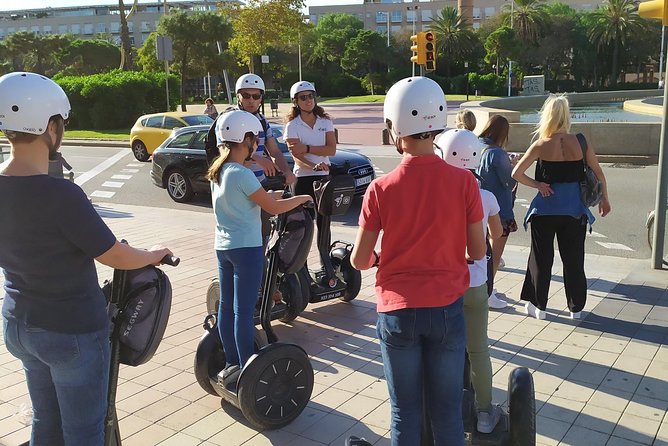
This is one reason the small-group arrangement matters. With two to six riders per guide, it is easier for the guide to keep beginners together and point out sights without losing anyone. Larger groups are divided among several guides for safety.
Same place, a completely different route:
- Barcelona: Guided Segway Tour
★ 4.8 · 412 reviews - Barcelona Guided Tour by Segway
★ 5.0 · 374 reviews - Barcelona: City and Seafront Guided Segway Tour
★ 4.9 · 317 reviews - Barcelona Guided Tour on Segway
★ 5.0 · 267 reviews
Port Vell and the royal shipyards
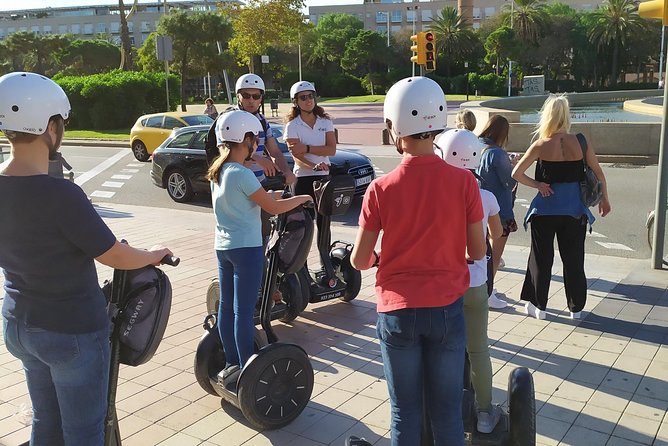
The route continues toward Port Vell, Barcelona’s old harbor. This is where the city’s maritime side comes into view. The former royal shipyards are part of the story, and the harbor gives you a wide change of scenery after the enclosed streets of the Born Quarter.
The guide explains the port and its role in the city, while you ride rather than stop for a long museum visit. That makes the section lively, but it also means you should not expect a detailed examination of the shipyards.
Port Vell is a good place for photographs. The open water, boats, waterfront buildings, and city skyline create a different picture of Barcelona from the inland streets. If you are taking photos while riding, wait until the guide has stopped the group. A moving Segway is not the time to manage a phone.
Columbus Monument and La Rambla
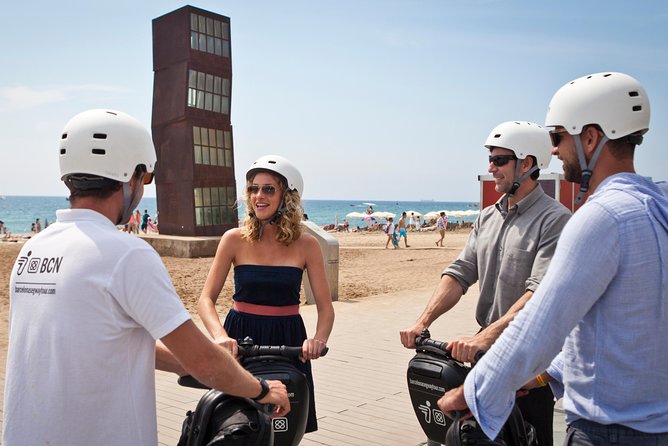
At the end of La Rambla, you reach the Columbus Monument, one of Barcelona’s most recognizable waterfront markers. The tall statue points out toward the sea, and its position gives the tour a clear link between the city center and the harbor.
La Rambla itself is more interesting as a connector than as a riding destination. It is famous, crowded, and full of activity, so the group passes through rather than treating it as a quiet cycling path. The guide may point out details along the avenue and explain how it links the old city to the port.
This part can be busy, and that is worth knowing before you book. If you want an empty boulevard and uninterrupted speed, you may find La Rambla frustrating. If you want to see how Barcelona’s old center meets its waterfront, it is an important piece of the route.
Barceloneta and the old fishermen’s quarter
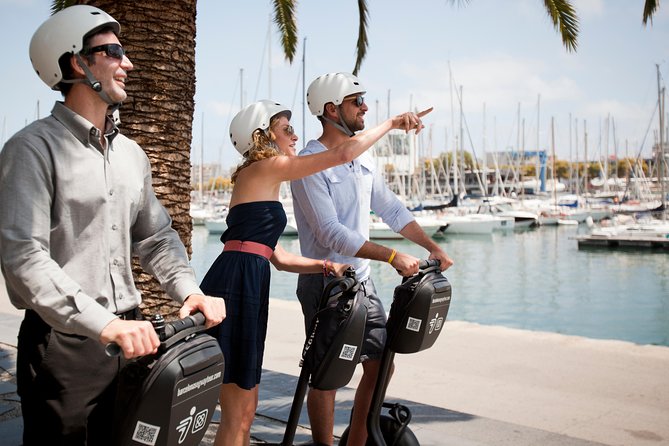
From the Columbus Monument, the tour heads toward Barceloneta. The district began as a neighborhood for fishermen and port workers, and its narrow streets still feel closely tied to the sea. The ride helps you see the contrast between older residential Barcelona and the more recent waterfront redevelopment.
The guide may point out the city’s patron, La Mercè, as you move toward the beach. The route then follows the waterfront, where the views open up and the Segway feels particularly suited to covering distance.
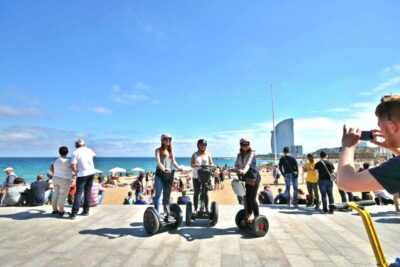
The beach section is one of the strongest parts of the tour. You get picture-friendly views, fresh air, and a welcome break from the dense streets. It also shows Barcelona as a coastal city rather than only a collection of churches, boulevards, and apartment blocks.
Weather matters here. In winter, the operator recommends warm, water-resistant clothing and gloves. In less settled weather, the ride can still go ahead, but you should dress for exposure. One rider enjoyed the experience despite poor weather, yet conditions can affect how much you enjoy the beach views.
Vila Olímpica and Barcelona’s modern edge
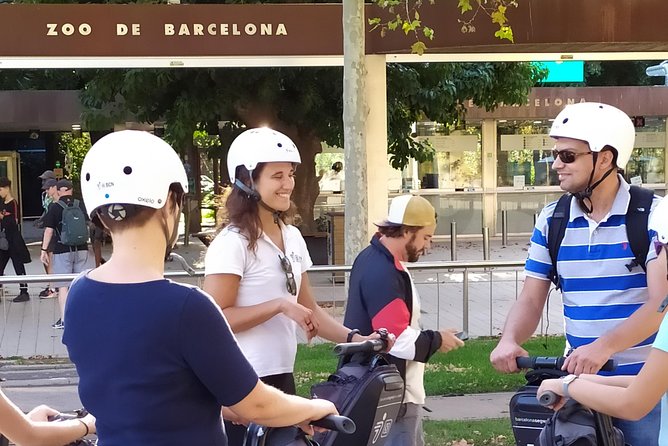
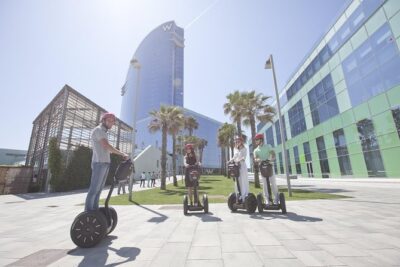
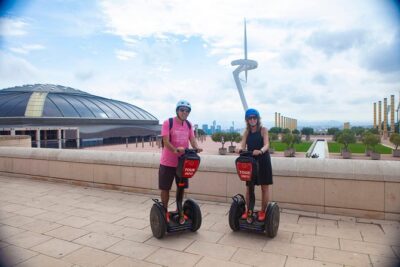
The route continues toward Vila Olímpica, the Olympic Village built for the 1992 Summer Olympics. This section shows one of the major changes in modern Barcelona, when former industrial and waterfront areas were reshaped for the Games and public access to the coast improved.
You then reach the city’s newer 22@ innovation district, where older industrial roots meet modern business and technology spaces. The tour does not present this as a long architectural study, but it gives you a quick sense of how Barcelona keeps changing beyond its Gothic center.
This is a useful stop for anyone who wants more than postcard sights. The Olympic waterfront and 22@ area explain why the city looks different near the coast than it does in the Born Quarter. You see the past and the future within the same two-hour loop.
The ride back through the city
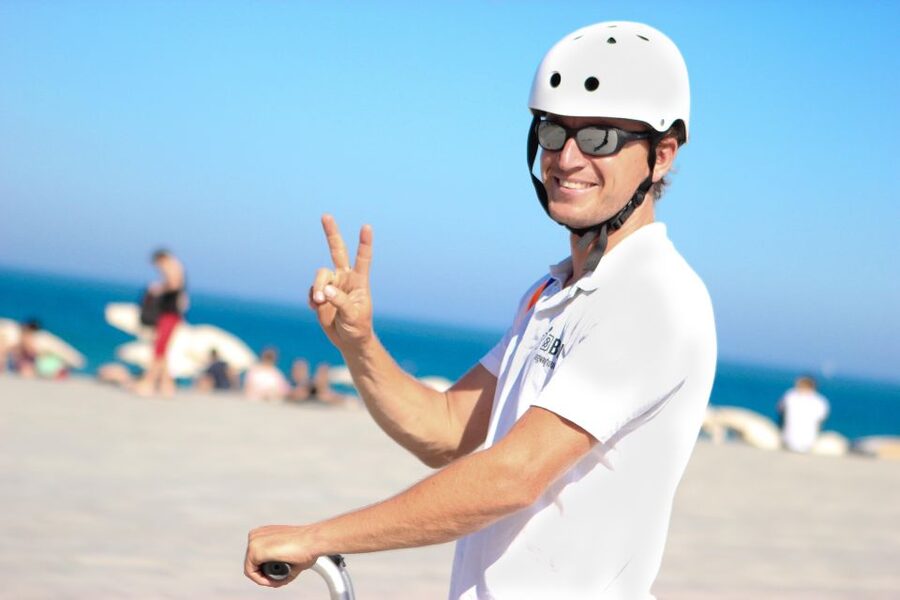
After the waterfront, the tour returns through the listed sights and heads back to Passeig de Lluís Companys. The exact pace depends on the group, the guide, and how comfortable everyone is on the machines. A group with several beginners may spend more time practicing and less time stopping for long explanations.
That is not a flaw. Safety and comfort should come before speed. Several riders praise guides for keeping the group together, helping nervous beginners, and offering a good mix of history and fun. Alex, for example, is praised for riding carefully on roads and making sure the group stayed together.
The 2-hour length is well judged for most people. It is long enough to visit a wide range of districts, yet short enough that a first-time rider is unlikely to feel worn out. If you want a full-day sightseeing experience, this is not it. If you want an active introduction to Barcelona, the timing works well.
What the guides add
The guide is the heart of this experience. The route itself is attractive, but the stories and practical help turn a ride into a city tour. You can request service in Dutch, English, French, German, Italian, Portuguese, Russian, or Spanish.
The strongest pattern in the feedback is patience. First-time riders repeatedly praise guides for explaining the controls, staying close to the group, and offering reassurance on bumps or small hills. Paolo was especially praised for helping a middle-aged rider feel safe, while Ruslan and Stephan are repeatedly described as friendly and encouraging.
You also get local suggestions along the way. Maria and Daniel are praised for combining historical information with recommendations for the rest of a Barcelona visit. That can make the tour more useful than a simple ride past monuments, especially if you take it near the start of your stay.
The guide quality can vary from person to person, as it does with any group activity. The named guides receive very strong praise, but you cannot assume you will be assigned a particular person. What you can expect is a multilingual guide, safety instruction, and a route designed for a small group.
Segway or electric bike?
The experience offers a choice between a Segway and an electric bike, depending on the option selected. Segways are available only to participants aged 16 and older under Barcelona’s local rules.
Younger participants can join on high-end electric bicycles at discounted rates. This is important for families. One parent booked expecting a child to use a Segway, then found that a 10-year-old had to ride an electric bike instead. The family enjoyed the arrangement, but you should know the age rule before booking.
A Segway is a good fit if you want to conserve energy compared with walking and do not want to pedal for two hours. A bike may feel more familiar to some people, though the tour route and vehicle option should be confirmed when you reserve.
Who should book it?
I would recommend this tour to first-time Barcelona visitors, couples, families with older teenagers, and anyone who wants a quick city overview without a long walking tour. It also suits people who enjoy a little adventure but do not want a demanding physical activity.
You should be comfortable standing for two hours and making stair-like movements without assistance. The activity is not suitable for pregnant women, people with mobility impairments, or anyone over 120 kilograms. The operator also strongly recommends that expectant mothers avoid Segway activities for safety reasons.
If you dislike riding near other people, feel unsteady on moving equipment, or want long visits inside monuments, choose a walking tour or museum visit instead. The Segway is easy to learn for many beginners, but it still requires balance, attention, and a willingness to practice.
Is $32 good value?
At $32, this is a good-value introduction to Barcelona. You receive a vehicle, helmet, safety equipment, insurance, training, a guide, and one drink. More importantly, you cover the distance between the old city, harbor, beach, and Olympic waterfront in two hours.
The value is strongest if you are short on time. It is also strong for a first day, when a broad overview can help you decide where to return later. The price is less compelling if you plan to spend most of the ride waiting for nervous members of your group or if you prefer to explore one neighborhood slowly.
Small groups improve the value. Two to six people per guide means the instruction is not purely one-size-fits-all. Larger bookings are divided between several guides, which helps with safety but may make the group feel less like a private tour.
Practical details before you reserve
Free cancellation is available up to 24 hours before the activity for a full refund, and you can reserve now and pay later. Starting times vary, so check availability for your date.
Bring a passport or ID card, comfortable shoes, and comfortable clothing. The provider lists helmet, safety equipment, insurance, training, and one drink as included.
I would book this earlier in your Barcelona visit if possible. That way, the route can help you understand the city’s layout, and the guide’s suggestions may help shape the rest of your plans. Keep your afternoon flexible enough to enjoy the ride rather than rushing straight into another timed attraction.
Should you book the Barcelona Segway Tour?
Book it if you want a lively, efficient way to connect Barcelona’s old streets with its harbor and beach. The combination of small groups, careful instruction, multilingual guides, and a $32 price makes it a sensible choice for first-time riders who meet the age and mobility rules.
Skip it if you want a slow interior visit to major monuments, cannot stand comfortably for two hours, or dislike balancing on a moving vehicle. Families should book with care because children under 16 must use an electric bike instead.
For most eligible visitors, I would choose this tour early in the trip. The route gives you Arc de Triomf, Born, Santa Maria del Mar, Port Vell, Columbus Monument, La Rambla, Barceloneta, Vila Olímpica, and 22@ in one compact outing. That is a lot of Barcelona for the money, with enough local guidance to make the city easier to explore afterward.
FAQ
Where does the Barcelona Segway Tour start?
The meeting point is the activity provider’s office at Passeig de Lluís Companys, 10, beside Arc de Triomf and near Parc de la Ciutadella.
How long does the tour last?
The tour lasts two hours.
How much does the tour cost?
The listed price is $32 per person.
What is included in the price?
The tour includes a Segway i2, guide, training, safety equipment, insurance, helmet, and one drink.
What languages are available?
Guides may lead the tour in Dutch, English, French, German, Italian, Portuguese, Russian, or Spanish.
Can children join the Segway tour?
Segway participants must be at least 16 years old because of local regulations. Younger participants can join on high-end electric bicycles at discounted rates.
How large are the tour groups?
Small groups have two to six people per guide. Larger groups are split between several guides for safety.
What should I bring?
Bring a passport or ID card, comfortable shoes, and comfortable clothes. In winter, warm, water-resistant clothing and gloves are recommended.
Can I cancel the booking?
You can cancel up to 24 hours in advance for a full refund. The activity also offers a reserve-now, pay-later option.
Just added around Barcelona
- Highlights of Barcelona Segway Tour★ 5.0 · 41 reviews
- Welcome to Barcelona Segway and eScooter Tour★ 5.0 · 2 reviews
- Seaside Segway Tour in Barcelona★ 5.0 · 33 reviews
- Segway Flexible Private Tour in Barcelona★ 5.0 · 16 reviews
- Segway Tour to Sagrada Familia views★ 5.0 · 5 reviews
- Montjuic Hill: Panoramic Segway Tour★ 5.0 · 2 reviews
- Sagrada Familia Segway Tour★ 5.0 · 12 reviews
- Gran Gaudi – 3H Segway tour★ 5.0 · 4 reviews
Barcelona Segway Tours, compared.
Browse the lists this tour appears in