REVIEW · TOURS
Kalemegdan Segway Tour
Belgrade opens up quickly on a Segway. This 1-hour-40-minute tour links the city’s main pedestrian street, Republic Square, and Kalemegdan Fortress while giving you a useful first look at Belgrade’s long past and busy present. I especially like the small maximum group of 10 and the patient instruction, which matters if you have never used a Segway. I also like that the route covers far more ground than a short walking tour without requiring a full day on your feet.
The main drawback is the weather requirement. The tour can be canceled in poor conditions, and riding a Segway may not suit anyone who feels unsteady on two wheels. At $60.08 per person, it is not the cheapest way to see central Belgrade, but the time saved between sights gives it fair value for a first outing.
Key points to know before booking
- The route begins downtown at Maršala Birjuzova 14, near Mikan restaurant, and returns to the same meeting point.
- You cover Knez Mihailova Street, Republic Square, and Kalemegdan, the central string of sights in old Belgrade.
- The tour combines history with ordinary city life, including shops, cafés, street activity, sports grounds, churches, museums, and old taverns.
- A maximum of 10 people keeps the group manageable, while an English-speaking guide leads the experience.
- Beginners get help with the Segway, and one review highlights a guide who was especially patient and accommodating.
- Free cancellation is available up to 24 hours before departure, but poor weather may force a new date or refund.
Starting downtown at Maršala Birjuzova 14
The tour begins at Segway Belgrade on Maršala Birjuzova Street, near Mikan restaurant. This central starting point is useful because you are not spending the first part of your morning reaching some distant transport hub. The activity also ends here, which makes it easy to continue with lunch, shopping, or another stop in central Belgrade.
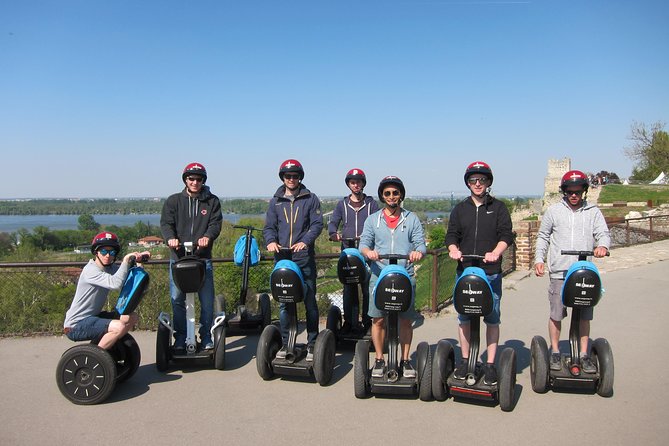
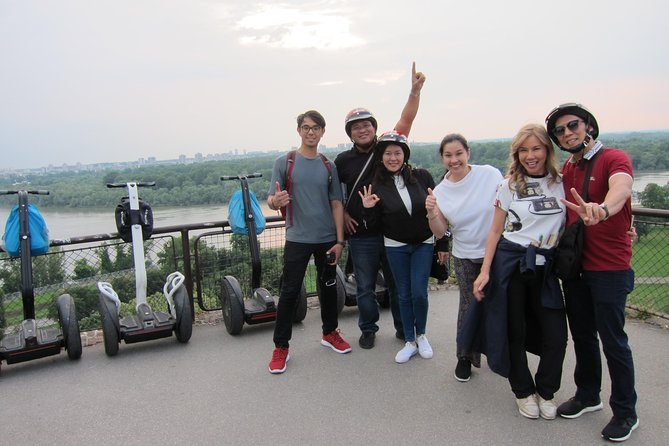
Your guide provides a helmet and helps you get comfortable with the Segway before setting off. That short introduction matters. A Segway looks simple, but you need a moment to learn how leaning controls movement and how to stop without feeling awkward. One detailed review praises the guide’s patience and says the machine became easy after a while. That is a good sign for first-time riders, though you should still expect a brief learning period.
The group limit of 10 is another practical plus. A larger group could make city riding clumsy, especially along pedestrian streets or near busy squares. With 10 or fewer people, you should have a better chance of hearing the guide and getting help if you need it.
The tour is offered in English, with Serbian, Russian, Italian, and German also available. If you want a Serbian-speaking guide, you need to request that when booking. The supplied information does not identify individual guides by name, so I would not book expecting a specific person.
A few more segway tours around the world worth a look
- Washington DC “See the City” Guided Sightseeing Segway Tour
★ 5.0 · 1,924 reviews - Guided Segway Tour of Downtown Nashville
★ 5.0 · 1,568 reviews - Rome Sights by Segway Tour
★ 5.0 · 1,543 reviews
Knez Mihailova Street, Belgrade’s grand pedestrian route
The first major part of the ride takes you along Knez Mihailova Street, Belgrade’s best-known pedestrian area. This is not simply a path from one monument to another. It is one of the places where the city shows its modern face: shops, cafés, restaurants, street performers, exhibitions, and people meeting friends.
I like this section because it gives you a feel for present-day Belgrade before the route turns toward fortifications and ancient remains. You can look at the old architecture, but you also see how the street functions now. It leads directly toward Kalemegdan, so the route feels natural rather than like a collection of disconnected stops.
A Segway is useful here because you can move through the center without the long walking time required to reach each area. Still, keep your expectations sensible. Knez Mihailova is a pedestrian street, not a private riding track. The pace may be controlled by other people, street activity, and the need to ride carefully. The benefit is coverage, not speed.
Near the beginning of the street, Republic Square provides a lively change of scene. Depending on the day, you might see public gatherings, exhibitions, or street performances. This is one of the places where the guide’s local explanation can add value, since the square is more than a photo stop. It is a major meeting point and a useful reference for understanding how central Belgrade fits together.
Republic Square and the Prince Mihailo monument
Republic Square is often described as the central square of Belgrade, and its location explains why. Knez Mihailova Street runs from here toward Kalemegdan. The Museum of Belgrade is nearby, the National Theatre sits across the street, and the monument to Prince Mihailo dominates the middle of the square.
The monument is often known simply as the Horse, a nickname that reflects its most obvious feature. It gives the square a clear focal point and makes this a good place to pause while the guide explains the city’s layout and public life.
You will also notice the practical side of the square. Bus and trolley lines meet here, so it is constantly connected to other parts of town. That makes Republic Square useful beyond the tour itself. If you are using this experience as your first Belgrade activity, remember the location. It can help you find your way back to the center later.
The square may feel crowded and active, which is part of its appeal but also a riding consideration. Your guide will need to balance explanation with safe movement around pedestrians. This is another reason the modest group size helps.
Kalemegdan Park and the fortress above the rivers
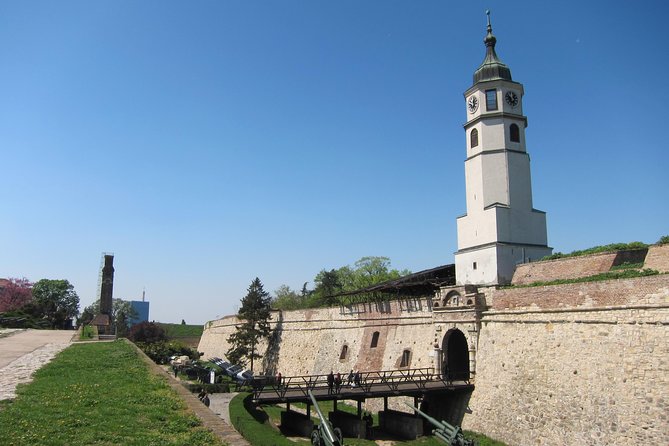
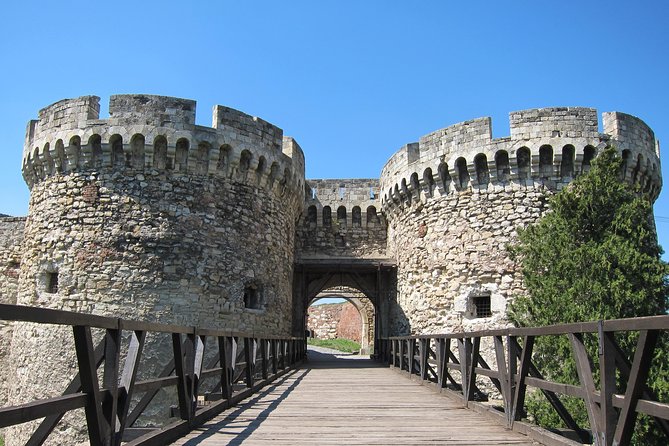
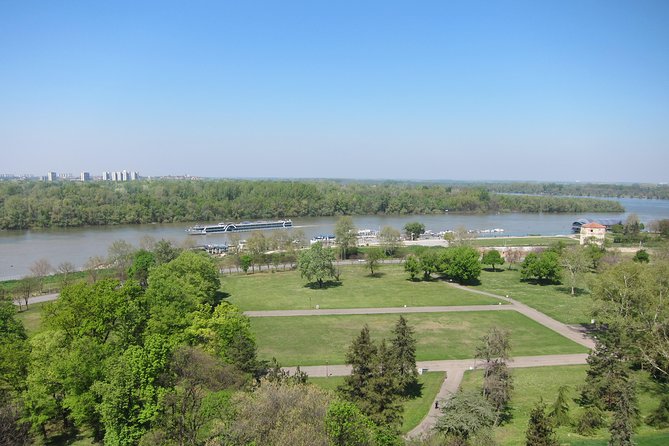
The major payoff comes at Kalemegdan, Belgrade’s great park and fortress complex. The tour presents this area as a place where many layers of the city remain visible at once. You are not looking at one isolated castle. You are moving through a large historic zone containing fortifications, military displays, monuments, ruins, views, and public spaces.
The route includes the Victor, Belgrade’s trademark symbol. This tall monument is one of the city’s best-known sights and an essential stop for understanding Belgrade’s visual identity. The fortress also includes weapons from World War I and World War II, giving the military story a more concrete form than a list of dates.
The tour points out a bastion connected with the beginning of World War I. That detail gives the fortress a strong connection to the events that shaped modern Europe. You also see Serbian medieval castle ruins, so the setting links medieval Serbia with the later military history of the city.
One of the most interesting promised details is the idea of 2,000 years of history appearing in layers along one wall. That is the sort of observation that makes Kalemegdan rewarding. Instead of treating each period as a separate chapter, the guide helps you see how different eras occupy the same ground.
You should not expect a long museum visit during this activity. The route covers a wide area, and the emphasis is on seeing important sites and understanding how they connect. If you want a slow, detailed study of every fortress building, you will need extra time after the tour.
Same place, a completely different route:
- Queenstown Segway Tour
★ 5.0 · 1,235 reviews - 60-Minute Guided Segway History Tour of Savannah
★ 5.0 · 1,163 reviews - Nice City Segway Sightseeing Tour
★ 5.0 · 1,050 reviews - Paris Highlights Segway Tour
★ 4.9 · 1,037 reviews
Tito’s bunker and underground Belgrade
The Kalemegdan section also includes Tito’s bunker and the Roman well, two stops that add a more unusual edge to the route. These are not the standard postcard sights, and they help show that Belgrade’s story is partly hidden below the ground as well as visible in its monuments.
The Roman well gives you a glimpse into the underground side of the city. Tito’s bunker connects the fortress area with the political and military history of the 20th century. Together, these stops broaden the experience beyond medieval walls and scenic viewpoints.
The information provided does not say how long you enter or explore these sites, so treat them as guided points of interest rather than guaranteed extended visits. That distinction matters if you are hoping for a full interior tour. The Segway format is designed to link many places in one outing, not to spend an hour inside a single bunker.
The military museum is also included in the route. Again, the supplied details do not confirm a full museum admission or a long indoor visit. You should see this as an introduction to the site and its role in Belgrade, with more time needed later if you want to examine the collections closely.
Sports, monuments, and the city’s changing identity
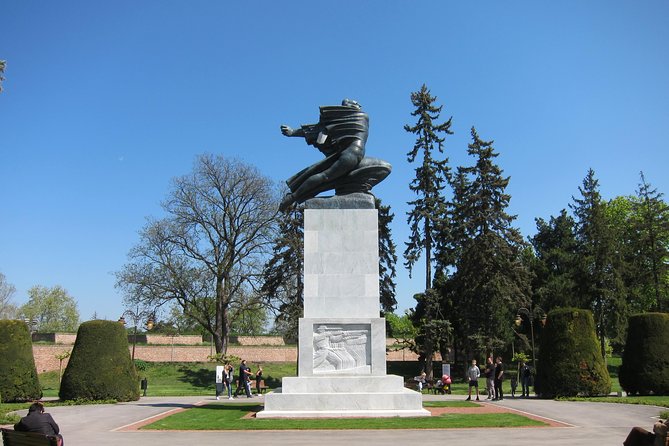
The route includes the sports fields connected with the founding of Partizan and Red Star clubs. This is a useful reminder that Belgrade is not only fortresses and old churches. Football is a major part of local identity, and these fields connect the city’s history with its modern loyalties.
Two monuments of gratitude, one to France and one to Russia, add another layer to the route. Their presence reflects Serbia’s international relationships and the way political memory appears in public spaces. You may not remember every date, but the stops help you notice how Belgrade tells its story through monuments.
This mix is one of the tour’s strongest features. You can move from military history to sport, from a fortress wall to a public square, and from medieval ruins to modern city life. That range makes the outing a good orientation tour. It gives you a list of places to return to, rather than trying to act as a complete history course.
Kralja Petra Street and Kosančićev Venac
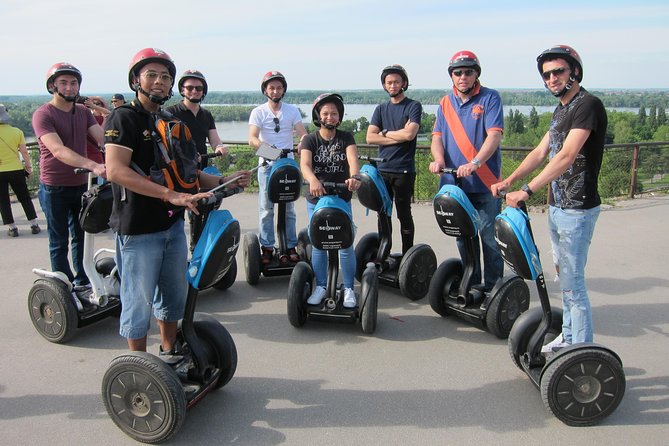
The ride continues toward older parts of central Belgrade, including Kralja Petra Street and Kosančićev Venac. Kosančićev Venac is sometimes compared with Montmartre in Belgrade because of its older streets and artistic atmosphere. The comparison is not a reason to expect Paris, but it signals a different mood from the broad pedestrian center.
These streets help you see the city at a more intimate scale. Knez Mihailova is the polished central route. Kralja Petra Street and Kosančićev Venac offer a sense of older Belgrade, where the pleasure comes from the setting and the change in pace.
The Congregation Church is another stop in this part of the route. Its inclusion rounds out the experience by adding religious architecture to the military, civic, and sporting sights already covered. You get a clearer picture of Belgrade as a city shaped by several traditions and periods.
Because the tour is only about 1 hour and 40 minutes, the guide must keep moving. You may pause for explanations and photographs, but this is not a slow architectural sketching tour. If you like seeing many landmarks in one morning, that pace works well. If you prefer long periods inside churches or museums, plan separate visits.
What the $60.08 price gives you
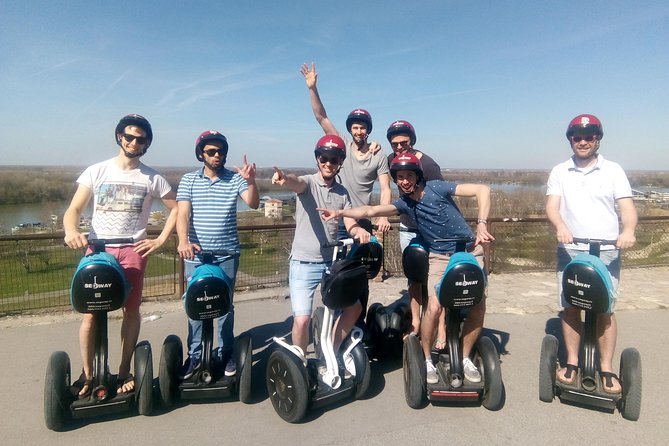
At $60.08 per person, this is a midrange sightseeing activity. You are paying for the guide, Segway use, helmet, and a compact route through several of Belgrade’s most important central areas. Beverages are included in the listed features, while food, lunch, and other meals are not.
I see the value mainly in the amount of ground covered. You can reach Knez Mihailova, Republic Square, Kalemegdan, the fortress, older streets, and several historic points without walking between every location. For a first day in Belgrade, that can save energy and help you decide where to return on foot.
The price is less attractive if you already know the city well or prefer exploring at your own speed. You could see many central areas independently, especially if you are happy to walk and read about the sights. The tour earns its cost through orientation, transport between stops, and the guide’s explanations.
A 100 percent recommendation rate from 18 reviews is encouraging, and the strongest praise focuses on the guide’s patience and the tour’s usefulness as a first activity in Belgrade. I would give that advice weight. Book it early if you want to use it near the start of your stay, since it is often reserved about 30 days ahead.
Who will enjoy this ride most?
I would recommend the tour to first-time visitors who want a fast, friendly introduction to central Belgrade. It suits people who enjoy history but do not want to spend the whole morning inside museums. The route also works well for anyone who wants to see how the old fortress connects with the modern center.
It is a good choice for small groups, couples, and families with older children. Children must be accompanied by an adult, and the activity allows no more than 10 people per booking. The information says most people can participate, but you should be comfortable standing, balancing, and riding a Segway.
I would be more cautious if you dislike group pacing, have poor balance, or want detailed indoor visits. The tour is also weather dependent. If rain or other poor conditions cancel the activity, you will be offered another date or a full refund.
Free cancellation is available until 24 hours before the start time. After that point, the payment is not refunded, and late changes are not accepted. The cut-off uses Belgrade local time, so check the clock before making a last-minute change.
Should you book the Kalemegdan Segway Tour?
Book it if you want an efficient first look at Belgrade, especially if Kalemegdan and the central old town are high on your list. The combination of a patient guide, a maximum group of 10, and a route that mixes fortresses, monuments, churches, sports history, and modern streets gives you more context than a simple ride through the park.
Skip it if you prefer a slow walking tour, need guaranteed indoor visits, or are uncomfortable on a Segway. For everyone else, this is a sensible way to get your bearings early in a Belgrade stay. You can return later to the museum, bunker, church, or fortress areas that deserve more time.
FAQ
Where does the Kalemegdan Segway Tour start?
It starts at Segway Belgrade, Maršala Birjuzova 14 in Belgrade, near Mikan restaurant.
Where does the tour end?
The activity ends back at the original meeting point on Maršala Birjuzova Street.
How long does the tour last?
The tour lasts approximately 1 hour and 40 minutes.
What languages are available?
The tour is offered in English. Serbian, Russian, Italian, and German are also available. If you want a Serbian-speaking guide, specify that when booking.
Is a helmet provided?
Yes. Helmet use is included, along with use of the Segway and a local guide.
What is the cancellation policy?
You can cancel at least 24 hours before the start time for a full refund. Poor weather may lead to a different date or a full refund.
Just added around the world
- Segway Tour Wroclaw: Ostrow Tumski Tour – 1,5-Hour of Magic!★ 5.0 · 2 reviews
- Palma: Private Guided Segway Tour★ 4.9 · 15 reviews
- Krakow: 2h World War II, visiting the Ghetto segway tour★ 5.0 · 2 reviews
- Cave Point & Whitefish Dunes State Park Segway Tour★ 5.0 · 3 reviews
- Victoria Falls: Segway Tour★ 3.8 · 8 reviews
- Versailles Palace: Guided Segway Tour in the Park★ 5.0 · 7 reviews
- Valencia: Turia Park Segway Tour★ 4.9 · 6 reviews
- Valencia: Fantastic Segway Tour from the Center to the Beach★ 5.0 · 5 reviews
Tours, compared.

Washington DC “See the City” Guided Sightseeing Segway Tour
Read our review →
60-Minute Guided Segway History Tour of Savannah
Read our review →