
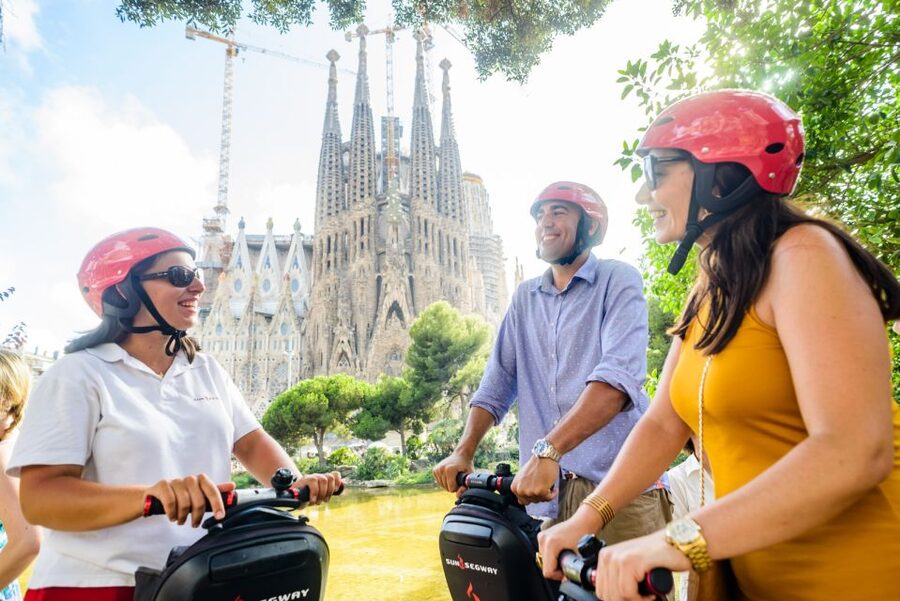
REVIEW · BARCELONA SEGWAY TOURS
Barcelona: 2,5hr Art of Gaudí Segway Tour
Gaudí comes alive at street level. This 2.5-hour Segway tour links Barcelona’s Gothic Quarter, Born district, Ciutadella Park, Passeig de Gracia, Casa Batlló, Casa Milà, and Sagrada Familia in one well-packed outing. I like the mix of famous architecture and less obvious stops, especially the Roman ruins, Santa Maria del Mar, Arc de Triomf, and Gaudí’s early work near the park.
I also like the strong guide support. Dani was praised for careful safety guidance, clear French, and adapting the route to what his group had already seen. The main consideration is pace: the tour covers a large part of Barcelona, with most stops lasting about five minutes. You get excellent outside views and context, but no attraction entry is included.
Key points to know
- A wide city route: See the old quarters, Ciutadella Park, Eixample, Sagrada Familia, and the waterfront in one ride.
- Gaudí from several angles: Compare early work near the Three Dragons Castle with Casa Batlló, Casa Milà, and Sagrada Familia.
- Short photo stops: Most listed stops last about five minutes, so this is an overview rather than an inside visit.
- Small riding groups: Groups of up to 30 are divided into groups of six or fewer, each with a guide.
- Good guide reputation: Dani, Alberto, Maxime, Oscar, and Dany received especially warm praise for safety, friendliness, and clear explanations.
- Important riding limits: Segway riders must be at least 14 years old, 150 centimeters tall, and between 45 and 130 kilograms.
Why this Segway route works for Barcelona

Barcelona can feel spread out when you try to connect its old center with the Eixample and Sagrada Familia on foot. This route solves that problem by using a Segway to cover more ground without turning the outing into a bus ride.
You begin in the city center and return there after a large loop. Along the way, the tour links two different Barcelonas: the medieval streets around the Gothic Quarter and Born, and the broad planned avenues of the Eixample, where many famous modernist buildings line Passeig de Gracia.
I like that the route is not limited to the three best-known Gaudí buildings. You also see parts of the city that explain how Barcelona developed, including the waterfront, Ciutadella Park, Arc de Triomf, and La Monumental.
The format is best for a first or second day in the city. You get a useful sense of direction, then you can return later to the buildings that deserve more time.
A few more segway tours around Barcelona worth a look
- Barcelona Segway Tour
★ 5.0 · 680 reviews - Barcelona Segway Tour
★ 4.7 · 630 reviews - Barcelona: City Highlights Guided Segway Tour
★ 4.9 · 624 reviews
Starting with safety at the Three Chimneys Gardens
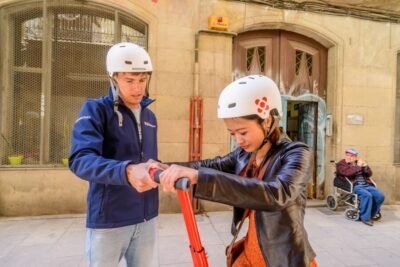
The tour begins at Jardins de les Tres Xemeneies, where you receive the Segway and helmet and spend about 10 minutes learning how to operate it. This training matters, especially if you have never used a Segway.
The controls are designed to be intuitive, and the guide gives instructions on safe operation before the ride begins. Still, you should expect to concentrate during the opening minutes. Comfortable shoes are a must, and sunglasses help on bright days.
The operator can handle groups of up to 30 people, but larger bookings are split into smaller groups of six or fewer. That is a useful arrangement because a small group makes it easier to hear the guide and receive help during the introduction.
The activity is not suitable for pregnant women or people with back problems. You must weigh between 45 and 130 kilograms and be at least 150 centimeters tall to ride a Segway. Participants under 14 do not ride Segways and instead join on e-bikes.
From Columbus to Barcelona’s waterfront
The first part of the route heads toward Mirador de Colom, the Columbus Monument at the lower end of La Rambla. The stop is short, around five minutes, but it gives you a quick orientation to the waterfront and the city center.
You then see El Cap de Barcelona, a modern public sculpture near the harbor area. This is a brief photo and explanation stop rather than a major architectural visit. It helps break up the ride and shows that Barcelona’s public art is not limited to Gaudí.
At Pla de Palau, the focus turns back to Gaudí. The lampposts here are an early example of his work, useful for understanding that his career developed over time. They are much more restrained than the curves and color of Casa Batlló, so the comparison is part of the appeal.
The waterfront portion adds variety, but you should keep your expectations realistic. These stops are designed for a quick look and a guide’s explanation, not for extended photography or quiet contemplation.
Roman Barcelona and the Born district
The tour includes the Gothic Quarter and Born, two of the city’s oldest districts. You see Roman remains and the Basilica of Santa Maria del Mar, one of Barcelona’s best-known churches.
A Segway is particularly useful here because it connects the old center with the newer districts without asking you to spend the whole afternoon walking. At the same time, historic streets can make this section feel more like a moving orientation than a detailed architectural tour.
The Born Centre Cultural is another stop on the return route. The center is known for preserving archaeological remains beneath a former market building. Here, the value is the short explanation and the chance to mark the location for a later visit.
The Basilica of Our Lady of Mercy also appears on the route. This adds another religious landmark, though the tour does not include entry. If you want to see interiors, you will need to return independently.
Same place, a completely different route:
- Barcelona: 2-Hour City Sights Guided Segway Tour
★ 4.9 · 610 reviews - Barcelona: Guided Segway Tour
★ 4.8 · 412 reviews - Barcelona Guided Tour by Segway
★ 5.0 · 374 reviews - Barcelona: City and Seafront Guided Segway Tour
★ 4.9 · 317 reviews
Ciutadella Park and Gaudí’s early contribution
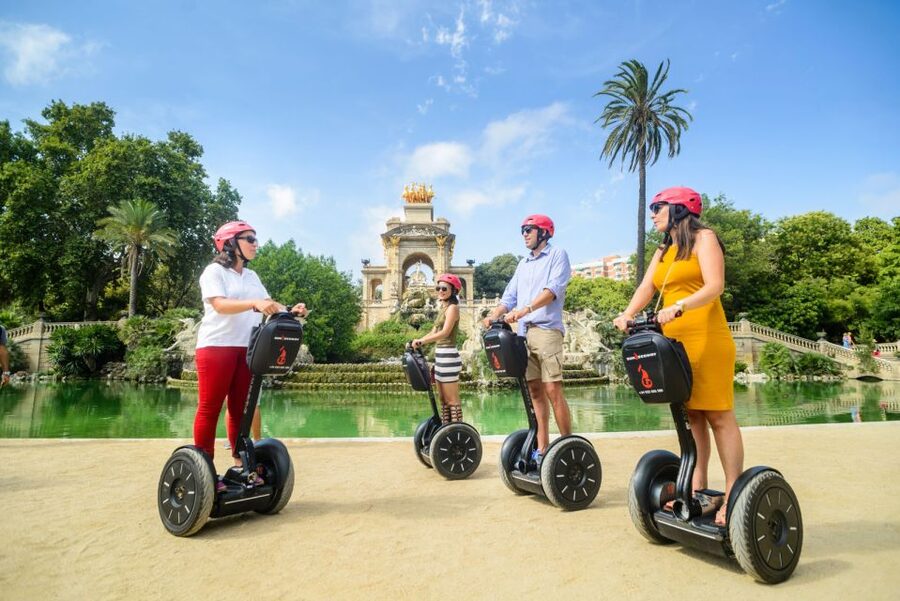
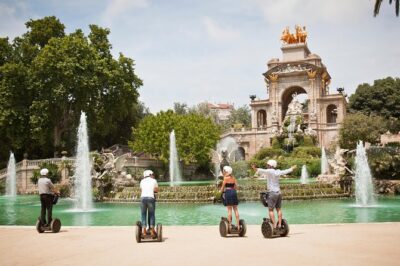
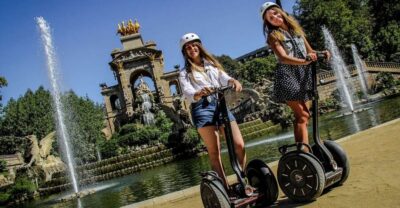
Ciutadella Park is one of the more enjoyable changes of pace. The route takes you through Barcelona’s biggest park, where you see the Parliament of Catalonia and the Castell dels Tres Dragons.
The castle is important for Gaudí fans because it was connected with his early professional work and with the Universal Exhibition period. This is not the mature Gaudí of Sagrada Familia. That is exactly why the stop helps: you can see an architect before his signature style fully formed.
The park also gives you a break from the dense city streets. You get open space, greenery, and a less commercial side of Barcelona before crossing toward Arc de Triomf.
The stop is still short, so I would not book this tour expecting a full park visit. It is a quick ride through a major public space, with enough information to make a return visit worthwhile.
Arc de Triomf and the Eixample grid
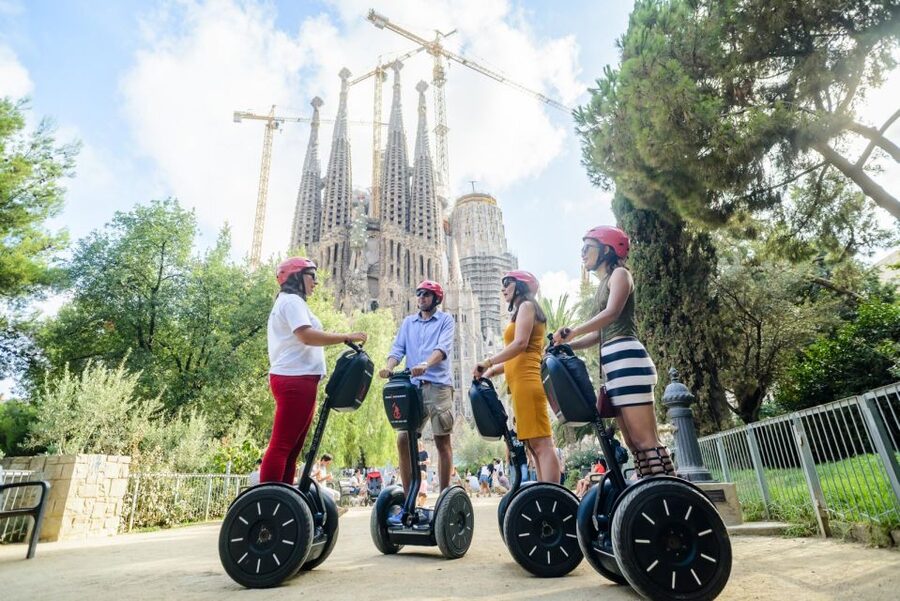
Arc de Triomf was built as the main entrance to Barcelona’s 1888 Universal Exhibition. Its red brick and sculpted decoration make it one of the city’s most recognizable urban landmarks.
From here, the route enters the Eixample, the large district created as Barcelona expanded beyond its old walls. The broad streets and block layout feel very different from the Gothic Quarter. This change gives the guide a natural way to explain why so many modernist buildings appear in this part of the city.
You pass lesser-known works such as Casa Calvet, Casa Amatller, and Casa de les Punxes. These stops are valuable because Barcelona’s modernisme is not only a Gaudí story. Other architects helped shape the district, and the comparison makes Gaudí’s choices easier to understand.
The Eixample section is also where the Segway earns its price. Covering this much territory on foot would take far longer, while the ride lets you compare buildings across several avenues.
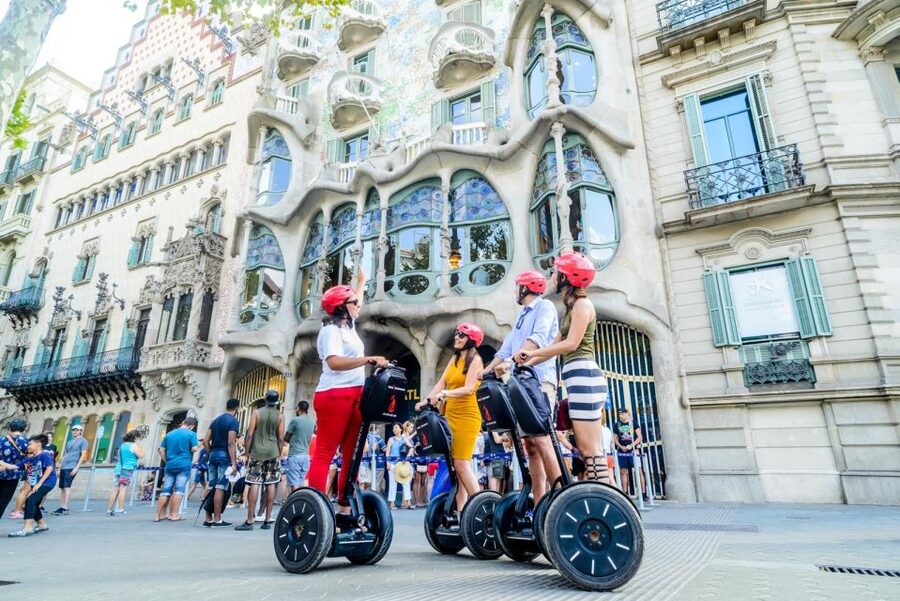
Passeig de Gracia and Casa Batlló
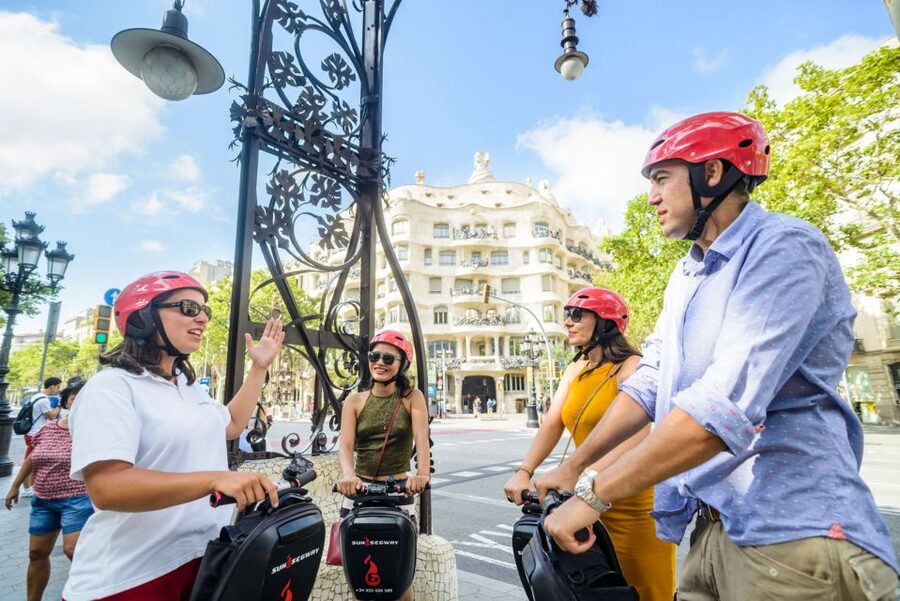
Passeig de Gracia is Barcelona’s grand shopping and architecture avenue. Luxury stores share the street with some of the city’s most famous modernist façades, creating a setting that is polished but still visually rich.
Casa Batlló is the highlight here. Its flowing forms, unusual colors, and fantasy-like exterior show Gaudí at his most theatrical. The guide’s explanation is useful because the building can look like a colorful surface from a distance. A few minutes of context help you notice the details rather than simply taking a quick picture.
The tour stops outside Casa Batlló. Entry is not included, so you will not see its rooms, light wells, or roof during this experience. That is an important distinction. If Casa Batlló is a top priority, plan a separate interior visit and use this tour as your architectural introduction.
The short stop also means you should have your camera ready. The route is designed for a guided overview, not a long pause in front of every façade.
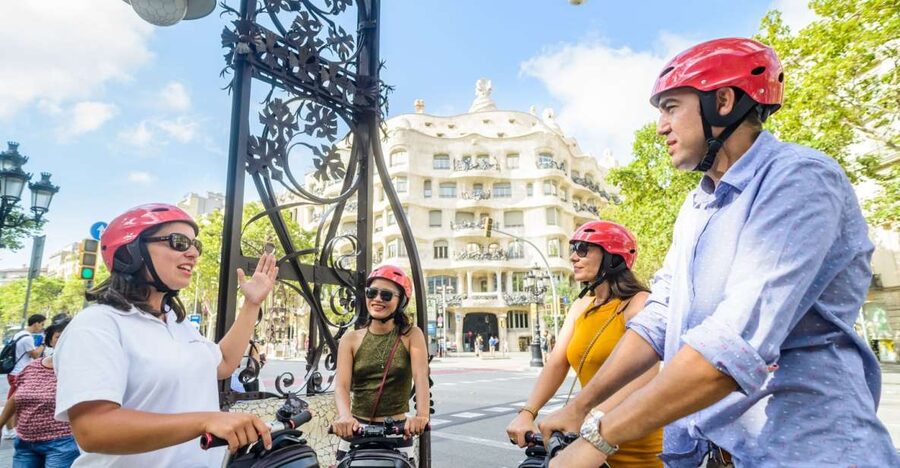
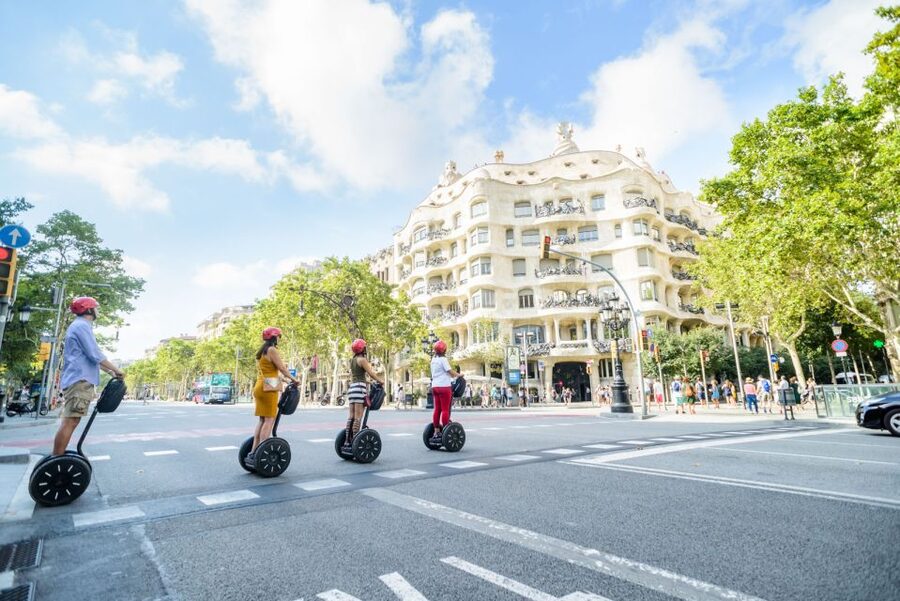
Casa Milà, known as La Pedrera
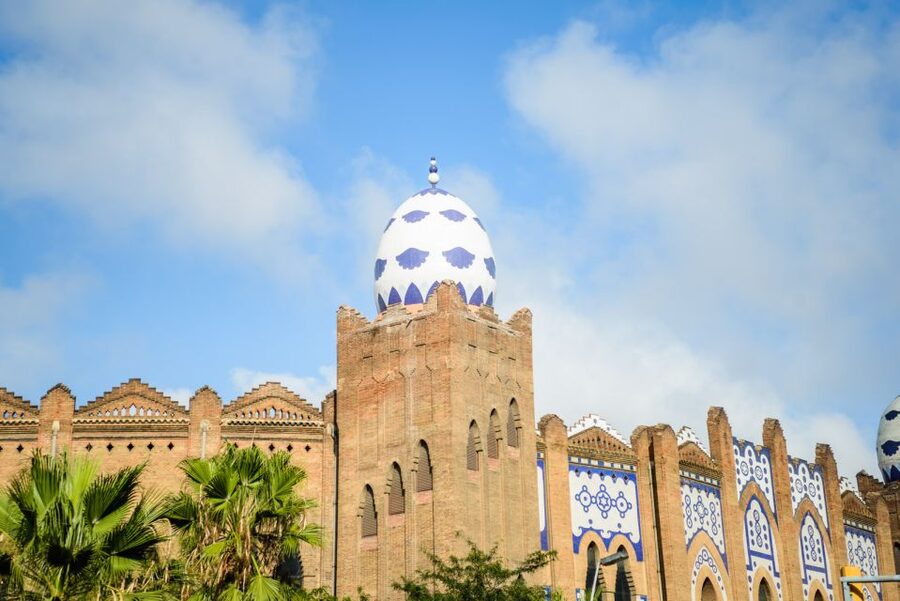
A short distance away, Casa Milà offers a sharp contrast with Casa Batlló. Built in 1906, it is often called La Pedrera because of its rough, stone-like appearance.
The façade is less colorful than Casa Batlló, but its curves and irregular surface show a different side of Gaudí’s work. The guide can help you see how the building rejects straight lines and conventional apartment design.
The historical setting is also interesting. When Casa Milà was built, it marked the edge between Barcelona and Vila de Gracia, before Gracia became part of the city. That detail gives the building more meaning than a simple photo stop.
Again, this is an exterior visit. You do not enter La Pedrera or visit its famous roof. If you want the full experience, you will need a separate ticket and more time.
Sagrada Familia in a five-minute stop
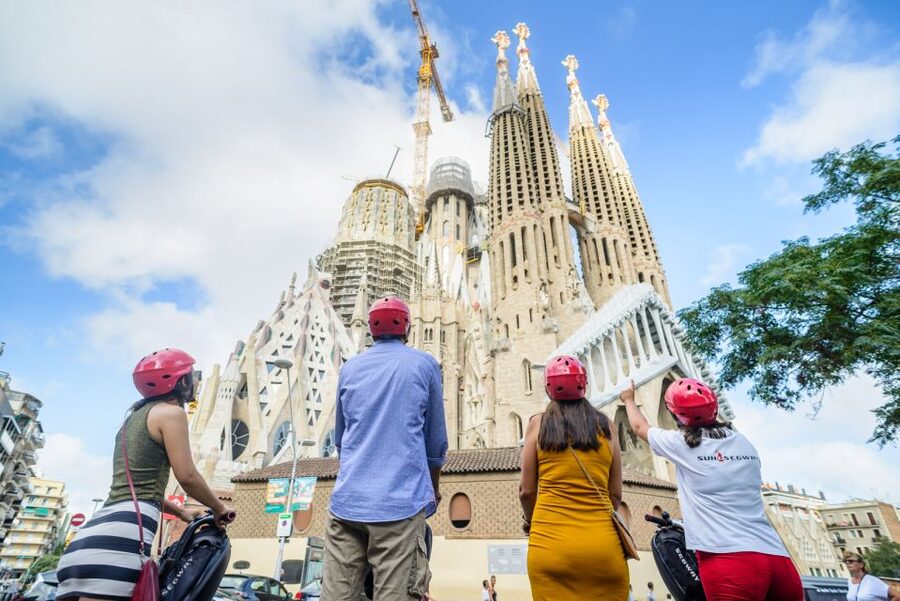
Sagrada Familia is the tour’s biggest architectural sight. Construction began in 1882, and the basilica remains unfinished, making it one of the world’s most recognizable works in progress.
The outside alone can be overwhelming. Towers, sculpted façades, and dense decoration make it difficult to take in quickly. A guide is useful here because you can get a short explanation of Gaudí’s vision before deciding if you want to return for the interior.
The itinerary allows about five minutes at Sagrada Familia. That is enough for a photo and a basic introduction, but not enough for a serious visit. Entry is not included, and the tour does not take you inside.
This is the clearest example of the tour’s central tradeoff. You see many major sights in one outing, but the stops are short. I would use the tour to learn what matters, then schedule a separate visit to the buildings that interest you most.
La Monumental and the route back
La Monumental is a former bullring where bullfighting took place until it was prohibited in Catalonia in 2012. The building adds a piece of recent social history to an otherwise architecture-focused ride.
The return route continues through Barcelona with stops at the Born Centre Cultural, the Basilica of Our Lady of Mercy, and Parc del Mirador del Poble-sec. These places help round out the city picture beyond the central Gaudí highlights.
Parc del Mirador del Poble-sec offers another elevated viewpoint and a final change of scenery. The route then returns to the starting point on Passatge de la Canadenca.
Because the tour includes so many locations, the timing is carefully divided. Most stops are listed at about five minutes, with 10 minutes set aside for the initial safety briefing. You should think of the experience as a guided city circuit, not a series of museum visits.
What the $42 price gets you
At $42 per person, the tour offers a reasonable way to combine transport, an introduction to Gaudí, and a live guide. You receive the Segway, helmet, training, and guiding in Spanish, English, French, Italian, Arabic, or Portuguese.
The value improves if you are short on time or want help connecting neighborhoods that do not sit next to one another. A private group option is available for those who want a more personal format.
The price does not include food, drinks, hotel pickup, or admission to any attraction. Tips for the guide are also separate. You should budget for an additional visit if you want to enter Casa Batlló, Casa Milà, Sagrada Familia, or any church or cultural site.
The strongest part of the value is the guide. Dani was praised for careful attention to safety, excellent French, and adjusting the outing around sights already seen by his group. Alberto, Maxime, Oscar, and Dany also received praise for friendliness, clear explanations, and helpful local suggestions. One useful tip is to book early in your stay if you want restaurant and sightseeing ideas from the guide.
Who should book this ride?
I would recommend it to adults and older teens who want a broad first look at Barcelona and feel comfortable trying a Segway. It suits people who enjoy architecture but do not want to spend a full day walking between distant districts.
It is also a good choice for repeat visitors who want to see Gaudí sites from outside while adding less familiar places such as Pla de Palau, Ciutadella Park, and La Monumental.
I would hesitate if you dislike riding in a city, have back problems, are pregnant, or want long, unhurried time inside major monuments. Families with children under 14 need to know that younger participants ride e-bikes instead.
The tour earns its place as a city overview. Its best feature is the range of sights, not the depth of any single stop.
FAQ
How long is the Barcelona Gaudí Segway Tour?
The tour lasts 2.5 hours, including a safety briefing and guided sightseeing stops.
What attractions are included in the route?
The route includes the Gothic Quarter, Born district, Roman ruins, Santa Maria del Mar, Ciutadella Park, Arc de Triomf, Passeig de Gracia, Casa Batlló, Casa Milà, Sagrada Familia, La Monumental, and other city landmarks.
Does the tour include entry to Sagrada Familia or Gaudí buildings?
No. The tour provides outside views and guided explanations. Admission to attractions is not included.
What languages are available?
The live guide may conduct the tour in Spanish, English, French, Italian, Arabic, or Portuguese.
What are the age and size requirements?
Segway participants must be at least 14 years old, at least 150 centimeters tall, and weigh between 45 and 130 kilograms. Children under 14 join on e-bikes.
Is a safety lesson provided?
Yes. The tour begins with a training session and safety instructions. The listed briefing at Jardins de les Tres Xemeneies lasts about 10 minutes.
Can I cancel the booking?
You can cancel up to 24 hours before the activity for a full refund. A reserve-now, pay-later option is also available.
Should you book it?
Book this tour if you want a fast, well-guided introduction to Barcelona’s architecture and neighborhoods, especially early in your visit. The combination of small riding groups, strong guide support, and a route that reaches both Sagrada Familia and the old city makes $42 a fair price.
Skip it if your main goal is entering and studying Gaudí’s buildings at length. For everyone else, this is a practical way to get your bearings, collect a long list of places to revisit, and see Barcelona from a more mobile point of view.
Just added around Barcelona
- Highlights of Barcelona Segway Tour★ 5.0 · 41 reviews
- Welcome to Barcelona Segway and eScooter Tour★ 5.0 · 2 reviews
- Seaside Segway Tour in Barcelona★ 5.0 · 33 reviews
- Segway Flexible Private Tour in Barcelona★ 5.0 · 16 reviews
- Segway Tour to Sagrada Familia views★ 5.0 · 5 reviews
- Montjuic Hill: Panoramic Segway Tour★ 5.0 · 2 reviews
- Sagrada Familia Segway Tour★ 5.0 · 12 reviews
- Gran Gaudi – 3H Segway tour★ 5.0 · 4 reviews
Barcelona Segway Tours, compared.
Browse the lists this tour appears in