
REVIEW · MUNICH SEGWAY TOURS
Munich 3-Hour Segway Tour: Nazi Munich & Royal Architecture
Munich rolls history into motion. I like the way this small-group Segway tour links Nazi-era sites with royal squares, museums, and the Isar River. I also like the generous beginner training, which gives you time to get comfortable before entering city streets. The main drawback is that you need reasonable balance, fitness, and confidence around traffic, and cold or wet weather can make the ride uncomfortable.
You cover a lot in three hours, from Königsplatz and the Munich Residenz to the famous Eisbachwelle surfers. Guides such as Canaan, Matt, Thomas, and Steve have earned praise for clear instruction, local stories, and good humor. At $91 per person, the tour is not cheap, but the small group, wide route, and included Segway make it a useful first look at Munich.
Key points to know before booking
- Thirty minutes of Segway training comes first: You are not simply handed a machine and sent into town. The initial lesson covers control, balance, and safety.
- The route connects Munich’s grandest sights: You pass Königsplatz, the Alte Pinakothek, Siegestor, the Residenz, the Bavarian State Opera, and Maximilianstraße.
- Nazi history is part of the tour: Karolinenplatz, Königsplatz, and nearby central sites help explain Munich’s role in the rise of Nazism.
- The group is limited to eight people: That gives you a better chance to ask questions and receive help while riding.
- Eisbachwelle adds a lively local touch: You stop to watch river surfers at one of Munich’s best-known public spectacles.
- Weather matters: The tour runs in ordinary rain and cold, with raincoats supplied, but wind chill can be sharp on a moving Segway.
What this Munich Segway tour is really like
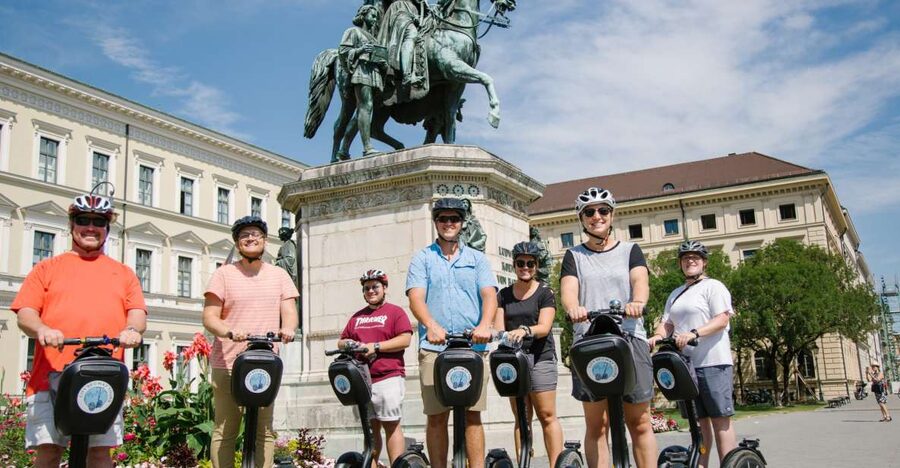
This is a sightseeing tour with a mechanical twist, not a serious driving test or a museum lecture. You glide between central Munich sights while your guide explains how the city grew from a medieval settlement into one of Germany’s wealthiest urban centers.
The Segway lets you cover more ground than you would on foot. You can reach the museum district, royal avenues, the Isar River, and the eastern edge of the historic center without spending the whole afternoon walking between them.
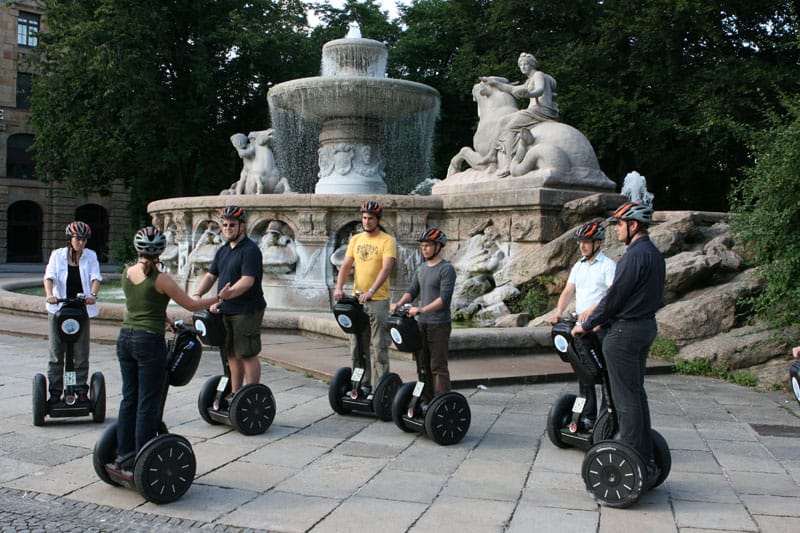
The group size is capped at eight participants. That matters here. You will need room to practice, make turns, stop safely, and keep together in city traffic. A small group also makes it easier to hear the guide and ask about places you may want to revisit later.
The tour is offered in English or German. Guides vary by departure, but several names appear repeatedly in the praise for this experience. Canaan is noted for one-on-one practice and good stories. Matt and Matthew receive strong marks for patient instruction, while Tom, Thomas, Steve, Bob, Michelle, and José are also praised for their warmth, humor, and grasp of Munich’s past.
The tone is generally light. That works well for a moving tour, though one comment found the opening jokes unnecessary. Expect history, but also expect a relaxed outing rather than a formal academic talk.
More three-hour rides around Munich:
- Munich’s Highlights 3-hour Segway Tour
★ 5.0 · 76 reviews - Segway Tour Munich Old Town 3 hours
★ 4.5 · 10 reviews - Segway tour Munich Beer Stories (3h)
★ 5.0 · 3 reviews
Starting at Karlsplatz and learning the Segway
You meet at Fat Tire Tours, at Karlsplatz 4, close to the large Stachus junction. From the McDonald’s at Karlsplatz, keep the city gate behind you, turn right along Sonnenstrasse, and look for the shop about 50 meters ahead on the right, inside the courtyard at Karlsplatz 4.
The first major part of the experience is the safety and orientation session. Allow about 30 minutes for this initial instruction, followed by additional practice before the sightseeing begins. This is especially helpful if you have never used a Segway.
The controls are designed to feel intuitive after a few minutes, but you still need to make smooth movements. Sudden shifts in your weight can affect your speed and direction. Your guide will explain how to ride, stop, and behave around other road users before the group sets off.
That training is one of the tour’s best features. A first-time rider in the group can receive extra attention instead of slowing down an enormous procession. Guides continue to help during the route, and one older couple specifically praised the patience and support they received.
Wear closed, comfortable shoes. Open-toed shoes are not permitted, and comfortable clothing is a must. You should also bring cash, though food and drinks are not included.
Karolinenplatz and Königsplatz: Munich’s grand stage and darker past
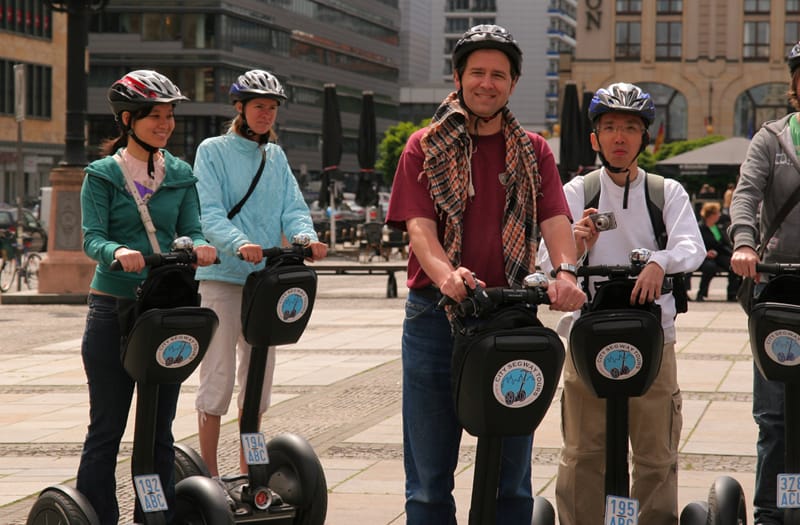
Karolinenplatz is one of the early photo stops. Its broad, formal layout gives your guide a good place to explain Munich’s political past and the city’s connection to the Nazi movement.
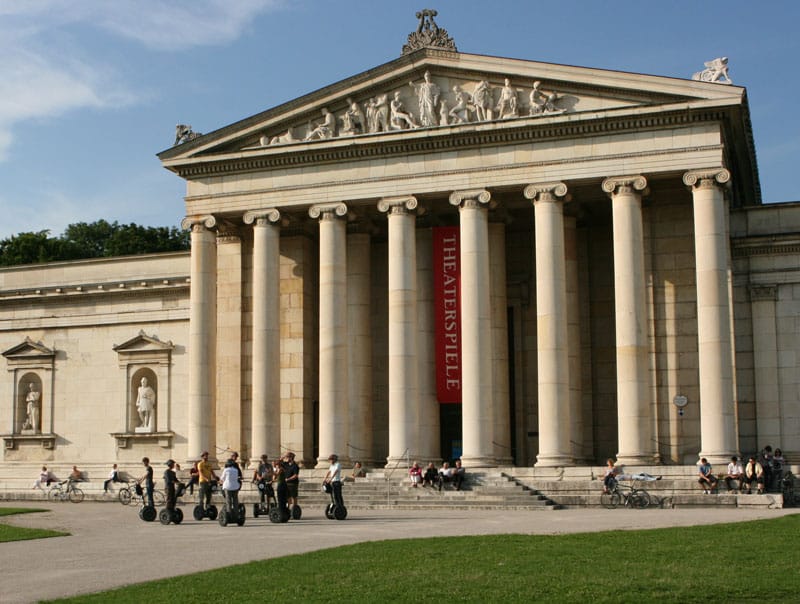
The route then reaches Königsplatz, one of Munich’s most imposing public spaces. Its classical design was modeled on the Acropolis in Athens, with monumental architecture arranged around a wide open square.
Today, the setting can look calm and elegant. The guide’s job is to explain how such spaces were used for political display and mass gatherings during the Nazi period. That contrast is important. You are not just admiring columns and symmetry. You are learning how architecture and public space can be used to project power.
The stop is short, listed at about five minutes, so do not expect a long lecture or time to study every detail. The value comes from seeing the location in person and getting enough context to return later on foot if the subject interests you.
Munich’s museum quarter: Alte Pinakothek and Pinakothek der Moderne
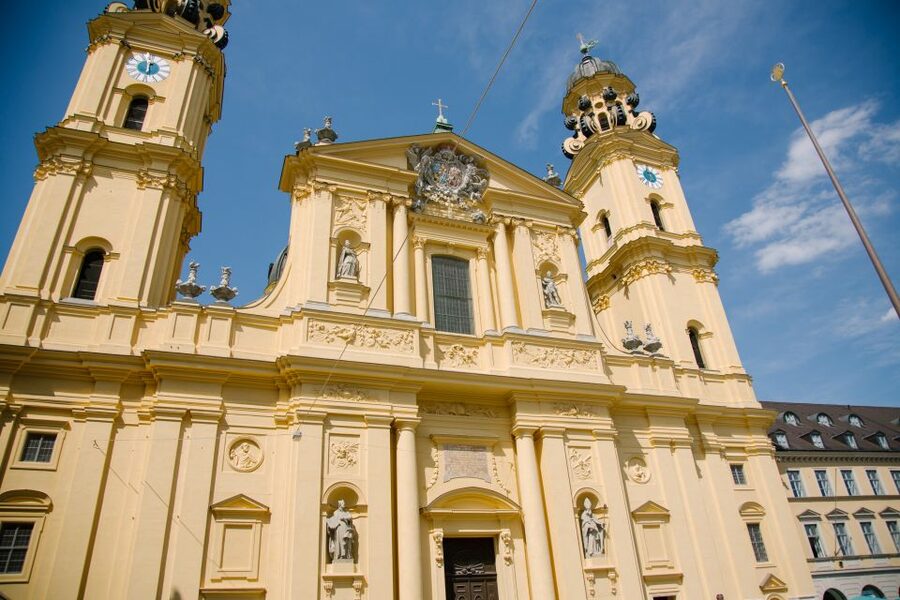
The ride continues through the museum district, passing the Alte Pinakothek and the Pinakothek der Moderne. These stops show another side of Munich, the city’s long investment in art, design, and public culture.
The Alte Pinakothek is associated with historic European painting, while the Pinakothek der Moderne represents modern and contemporary design and art. On this tour, you stop outside for photos and brief sightseeing rather than going inside.
That limitation is worth noting. If you want a full museum visit, set aside a separate block of time. The Segway route is better for orientation. You get a sense of where the museums are located, then you can return to the one that suits you.
The route also helps you understand how close many major sights are to one another. Instead of treating each museum as an isolated stop, you see how the cultural district fits into the wider city center.
A few more segway tours around Munich worth a look
- Munich: City Highlights Guided Segway Tour
★ 4.6 · 266 reviews - Munich Segway Tour
★ 5.0 · 181 reviews - Munich: City Highlights Guided Segway Tour
★ 4.5 · 161 reviews - Munich Classic City Segway Tour (English or German Guide)
★ 5.0 · 65 reviews
Siegestor, Odeonsplatz, and the Munich Residenz
Siegestor, or Victory Gate, is another photo stop on the route. Its monumental form fits the grand architectural theme of this part of Munich, and it provides a natural transition toward Odeonsplatz.
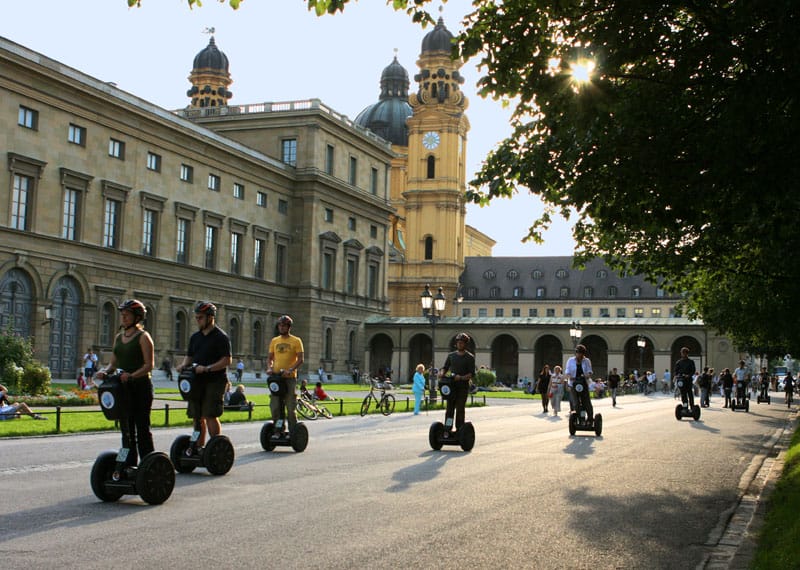
Odeonsplatz is one of the city’s most recognizable squares. The guide uses stops like this to connect Munich’s royal past with its political history. The square is also part of the central route, so it is useful for getting your bearings before exploring the old town on your own.
Next comes the Munich Residenz, the former royal palace of Bavaria. You see the exterior during the Segway tour, not the palace interiors. The building adds a welcome change of mood after the darker historical material around Königsplatz and the Nazi period.
The royal architecture is one reason this experience works well as a first Munich activity. You move from political history to palaces, opera, museums, and grand avenues without needing separate transport between them.
If you want to tour the Residenz rooms and treasury, plan another visit. The five-minute photo stop is enough to admire the setting, but not enough for an interior visit.
Haus der Kunst and Munich’s modern identity
The ride continues to Haus der Kunst, a major exhibition building with a strong connection to the cultural politics of the Nazi era. The stop gives your guide another chance to show how architecture, art, and government power were linked in twentieth-century Munich.
This part of the tour is useful because the historical discussion does not stop at famous monuments. You get a broader sense of how Munich’s identity was shaped by royal ambition, cultural institutions, and the political forces that overtook the city in the 1930s.
Again, the visit is external and brief. Think of it as a preview, not a gallery tour. If you want exhibitions or extended interpretation, return separately.
Eisbachwelle: Munich’s famous river surfers
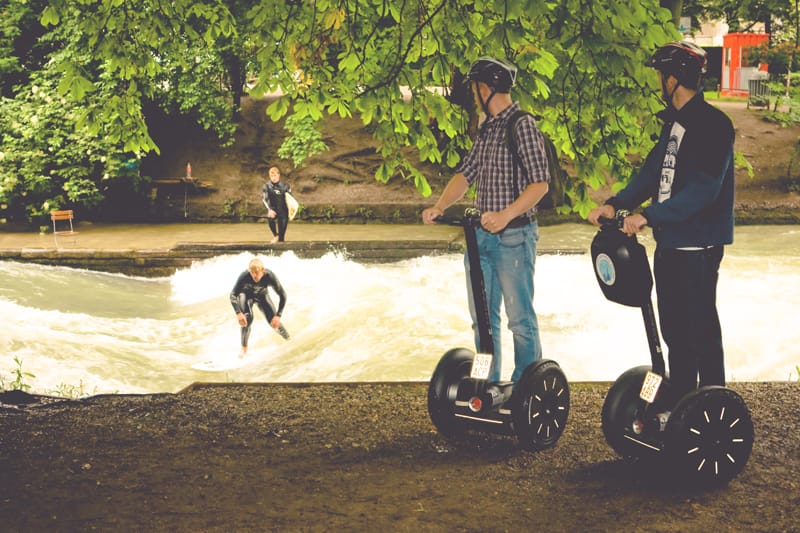
The Eisbachwelle is the route’s most unexpected stop. At this artificial wave in the Eisbach River, surfers ride continuously in the middle of the city.
The stop lasts about 10 minutes, giving you time to watch and take photos. It is a good change from formal buildings and political history. You see a very modern, energetic side of Munich, where a river channel has become a public stage.
The river surfers are also a reminder that Munich is not only about palaces, churches, and museums. The experience combines major landmarks with a local pastime that you might not find on a standard historic walking route.
Use care around the water and stay with the group. The stop is for viewing, not for trying the wave yourself.
The Angel of Peace, Isar River, and Maximilianeum
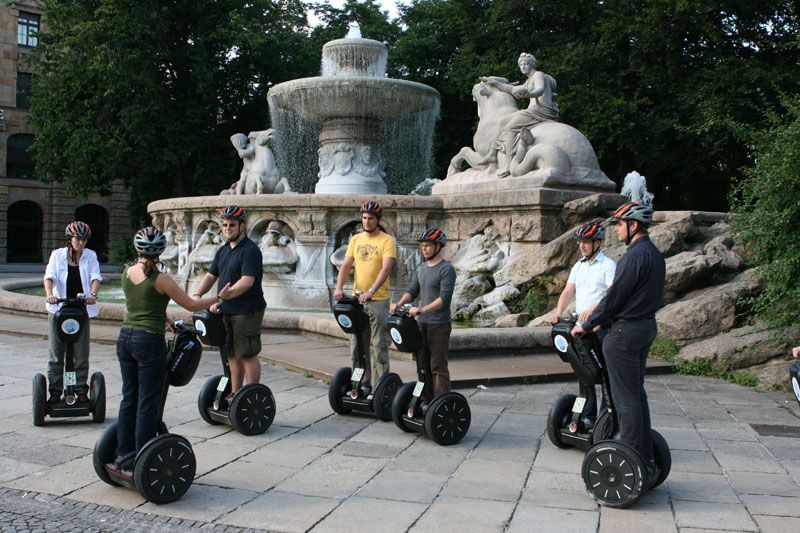
From the Eisbachwelle, the tour heads toward the Angel of Peace. The monument adds another grand visual point to the route and helps frame Munich’s eastern side.
You then ride along the Isar River. This is one of the more open sections of the trip, and the change in scenery gives your eyes a break from stone squares and formal façades.
The next major sight is the Maximilianeum, an impressive building above the Isar. It has housed the Bavarian state parliament since 1949. The building’s location and scale make it easy to understand why it was chosen as a seat of government.
These stops show Munich as a living capital of Bavaria, not just a preserved historic center. You move from royal monuments to a working political institution and a river used as part of everyday city life.
Maximilianstraße and the Bavarian State Opera
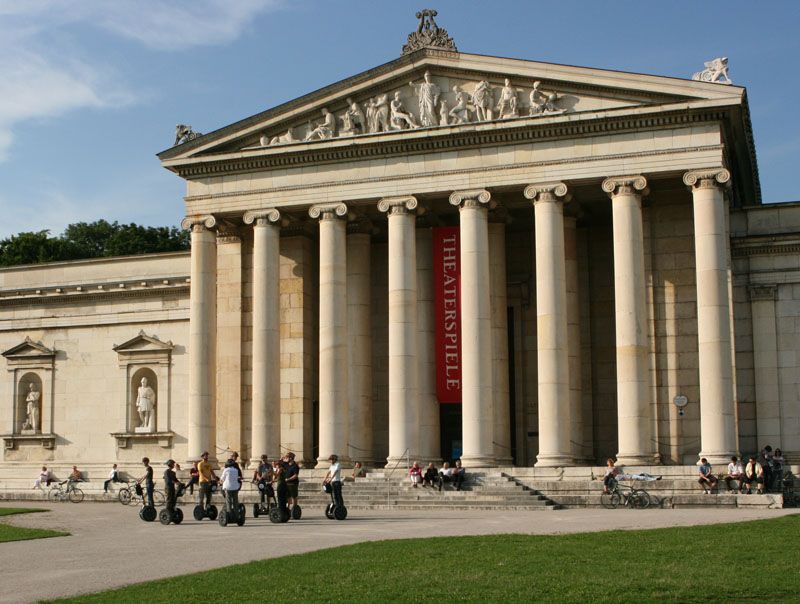
The return route follows Maximilianstraße, one of Munich’s grandest avenues. It is associated with royal planning, upscale architecture, and the polished side of the city.
The Bavarian State Opera is the final major photo stop before returning to Karlsplatz. The opera house reinforces the theme of Munich as a city where politics, court culture, music, and architecture have long been tied together.
The route ends back at the original meeting point. That makes the tour easy to fit into a day of sightseeing, especially if you are staying near the central station area or around Karlsplatz.
Is $91 a fair price?
At $91 per person, this is a mid-priced sightseeing activity. You are paying more than you would for a self-guided walk, but you receive a Segway, instruction, a live English or German-speaking guide, and a three-hour route through several parts of Munich.
The strongest value comes from the amount of ground covered. On foot, you could see many of the central sights, but reaching the Isar River, Maximilianeum, museum district, and Eisbachwelle in one outing would require more time and energy.
The eight-person limit also helps justify the price. A guide can stop to answer questions and assist new riders. The included raincoats are useful, though you should not rely on them as your only cold-weather protection.
I would consider the price worthwhile if you want an active introduction to Munich and expect to use the guide’s advice for the rest of your stay. It is less appealing if you prefer long interior visits, slow photography, or a quiet walking tour.
Who should book, and who should skip it?
This tour suits adults, older teens, couples, families with children aged 14 or older, and first-time Munich visitors who want a broad orientation. It can also work well for someone who has visited Munich before but wants to connect distant areas without a long walk.
You need to weigh between 100 and 250 pounds, or 45 to 115 kilograms. Participants must be at least 14. Anyone under 18 must have an adult present or complete the required insurance paperwork with an adult.
The activity is not suitable for pregnant women, people with back problems, recent surgery, mobility impairments, low fitness, or anyone over the stated weight limit. People over 95 are also listed as unsuitable.
City riding may include busy roads. One detailed account described the guide briefing the group on road etiquette and reported no problems, but you should still be comfortable following instructions near traffic.
Weather is another real factor. The tour runs in rain and cold except during extremely bad weather. Raincoats are supplied, and one guide provided jackets and gloves to underprepared riders, but you should dress warmly. Wind chill builds quickly when you are moving, especially in sleet or rain.
Practical tips for a better ride
- Book this near the beginning of your Munich stay if you want local suggestions for later sightseeing.
- Arrive ready to spend around 30 minutes learning the Segway before the main route begins.
- Wear closed shoes with comfortable clothing and bring extra layers in cool weather.
- Keep your hands free for balance and photography only when stopped.
- Treat the historical commentary as an introduction. Return to Königsplatz, the Residenz, or Haus der Kunst if you want more time.
- Ask your guide for recommendations. The small group makes it easier to get useful advice about the rest of your visit.
- Do not plan around food or drinks during the tour. Neither is included.
Free cancellation is available up to 24 hours before departure for a full refund, and you can reserve now while paying later. Check the available starting times before booking because the schedule varies.
Should you book this Segway tour?
Book it if you want an active, efficient introduction to Munich, especially if this is your first visit. The mix of Nazi-era history, royal architecture, museums, river scenery, and the Eisbach surfers gives you a much wider view than a simple old-town circuit.
Skip it if you dislike riding near traffic, need a slower pace, or want to spend serious time inside museums and palaces. At $91, it works best when you value the small group, wide route, patient training, and guide’s local perspective.
For many visitors, the biggest benefit is not mastering the Segway. It is learning how Munich’s royal past, difficult twentieth-century history, cultural institutions, political life, and everyday river culture fit together in one compact outing.
FAQ
Where does the Munich Segway tour start?
It starts at Fat Tire Tours, Karlsplatz 4. From the Karlsplatz McDonald’s, keep the city gate behind you, turn right along Sonnenstrasse, and look for the shop about 50 meters ahead on the right inside the courtyard.
Where does the tour end?
The tour ends back at the same meeting point at Karlsplatz 4.
How long does the tour last?
The tour lasts three hours. Check the available dates for the specific starting times.
Is Segway training included?
Yes. Segway orientation and safety instruction are included, with about 30 minutes set aside for the initial safety briefing and practice.
What languages are available?
The tour is offered in English and German.
How many people are in the group?
The group is limited to eight participants.
What age do you need to be?
You must be at least 14 years old. Minors under 18 must be accompanied by an adult or have an adult complete the insurance paperwork.
What should you wear and bring?
Wear comfortable clothes and closed, comfortable shoes. Bring cash. Raincoats are included, but you should dress for cold or wet weather because the tour operates in ordinary rain and poor weather short of extreme conditions.
Just added around Munich
- Munich’s Highlights 3-hour Segway Tour★ 5.0 · 76 reviews
- Segway tour Munich Beer Stories (3h)★ 5.0 · 3 reviews
- Munich Third Reich and WWII Segway Tour★ 4.5 · 20 reviews
- Beer Testing Segway Tour in Munich★ 3.5 · 2 reviews
- Munich 2-Hour Segway Tour★ 5.0 · 15 reviews
- Segway Tour Munich Old Town 3 hours★ 4.5 · 10 reviews
- 2-Hour Segway Discovery Munich Night Tour★ 5.0 · 2 reviews
- 2-Hour Segway Discovery Tour Munich★ 5.0 · 20 reviews
Munich Segway Tours, compared.

Munich Classic City Segway Tour (English or German Guide)
Read our review →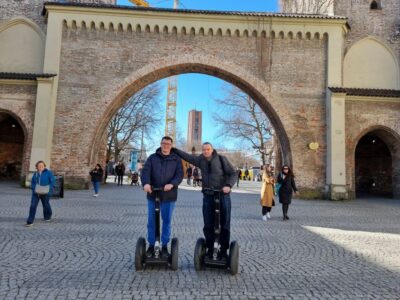
Third Reich and World War II Segway Tour of the City
Read our review →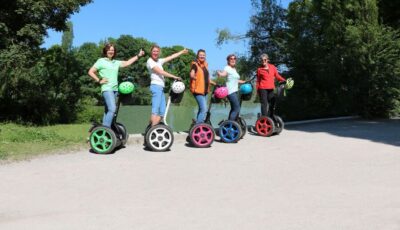

Browse the lists this tour appears in