
REVIEW · MUNICH SEGWAY TOURS
Munich Third Reich and WWII Segway Tour
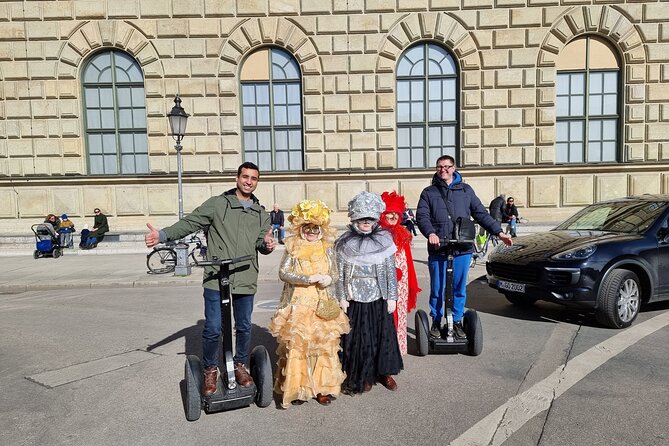
History moves faster on two wheels. This three-hour Munich tour combines easy city sightseeing with a serious look at the places tied to Adolf Hitler, Nazi rule, resistance, and wartime Munich. I like the way it covers far more ground than a walking tour, and I also like the relaxed help given to first-time Segway riders by guides such as Karl, Josef, Claudia, and Rawen.
The main drawback is that the route can feel less focused than the title suggests. You may pass through busy shopping areas, and one rider found the city crowded and expected more WWII sites. Cold weather is another real concern because riding outdoors for three hours can leave you chilled.
Key points to know before booking
- Three hours on a Segway: You cover central Munich much faster than on foot, with time for photos and questions.
- A serious Nazi-era route: Stops include Königsplatz, the Führerbau, the former Brown House site, the White Rose reference point, and Odeonsplatz.
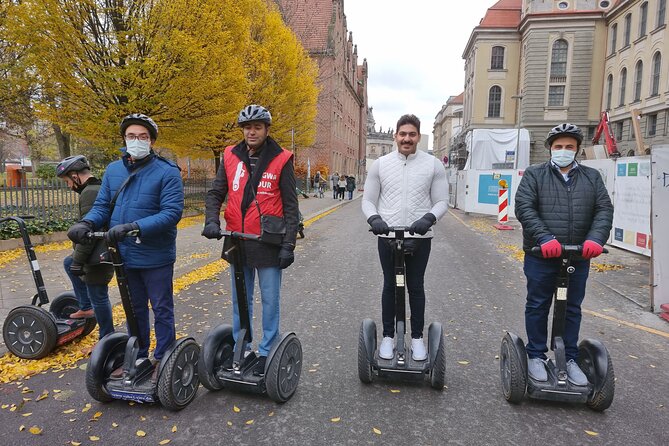
- Helpful instruction for beginners: Guides give riders time to get used to the machines before heading into the city.
- Personal guide quality matters: Karl, Josef, Claudia, and Rawen are praised for patience, local insight, and friendly service.
- A small group of up to 20: The size is manageable, though the experience may feel less personal when the full group is present.
- Dress for the weather: Cold air feels sharper when you are moving on an open Segway.
What this Munich tour is really about
This is not a standard highlights ride with a few war references added at the end. Its central subject is Munich’s role in the rise of the Nazi movement and Adolf Hitler’s plans for the city.
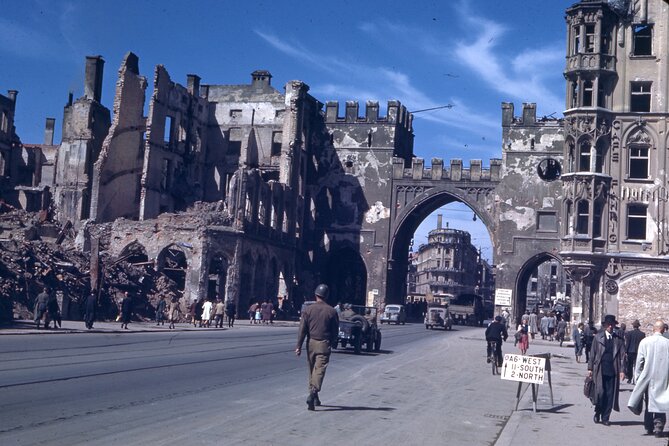
The tour presents Munich as the place where Hitler arrived in 1912, before he gained power and tried to turn the Bavarian capital into the political center of his movement. The story also touches on people who opposed the regime, the failed Beer Hall Putsch, and plans to rebuild Munich on a grand scale.
That gives the route a useful shape. You are not simply rolling from one famous square to another. The stops connect political ambition, public spectacle, resistance, and the physical remains of a difficult past.
Still, I would set your expectations carefully. This is an outdoor overview rather than a museum visit or a long lecture at every location. You see places, hear explanations, and move on. If you want detailed wartime military history, this may feel broad. If you want a clear introduction to Munich’s Nazi-era story while also seeing the city center, it makes good sense.
A few more segway tours around Munich worth a look
- Munich: City Highlights Guided Segway Tour
★ 4.6 · 266 reviews - Munich 3-Hour Segway Tour: Nazi Munich & Royal Architecture
★ 4.9 · 194 reviews - Munich Segway Tour
★ 5.0 · 181 reviews
Starting at Artur-Kutscher-Platz at 10:00
The meeting point is Artur-Kutscher-Platz 2A, 80802 Munich, with a 10:00 a.m. start. The tour returns to this same point after about three hours.
The morning departure is useful for visitors trying to fit several activities into one day. You can ride before the city gets even busier, then continue with museums, meals, or a second historical stop later. The route is near public transportation, which makes reaching the start point easier.
Allow time before departure for check-in and instruction. The exact amount of practice time is not specified, but the experience is designed for ordinary participants, and several riders appreciated being allowed to get comfortable before setting off. That matters if you have never used a Segway.
The group can reach a maximum of 20 people. That is small enough to keep the guide’s explanations within reach, but it is not a private outing. A full group may take longer to cross streets or gather at busy sites.
Learning the Segway before Munich gets busy
The machine is part of the appeal. A Segway lets you cover central Munich without the effort of walking between every stop, and it can reach places where cars cannot. The result is a wider view of the city in the same amount of time.
First-time riders should not assume the machine is difficult. Several participants found it easy to learn, and the guides were praised for giving clear help to nervous riders. One rider who had never used a Segway described the experience as safe and enjoyable after the initial instruction.
That said, balance and attention still matter. One unpleasant incident involved a Segway failure and a backward fall, although the rider was not seriously hurt. This is an isolated account within the supplied feedback, but it is a good reminder to pay attention during the safety briefing and tell the guide if the machine feels wrong.
Königsplatz and the political stage
Königsplatz is one of the most important early stops because it helps explain how architecture and public space were used by the Nazi movement. The square is broad and formal, making it easy to imagine how political power could be displayed there.
The guide’s role is especially important at a place like this. On your own, you may notice the grand setting but miss how Munich was presented as the home of the movement. On the Segway, you get the setting, a spoken explanation, and enough time to stop for pictures.
This is also where the tour’s pace becomes clear. You will hear context, look around, and continue rather than remain in one location for a long seminar. I find that useful for a first visit, but history fans who want every detail may want to add a museum or a dedicated walking tour afterward.
Same place, a completely different route:
- Munich: City Highlights Guided Segway Tour
★ 4.5 · 161 reviews - Munich’s Highlights 3-hour Segway Tour
★ 5.0 · 76 reviews - Munich Classic City Segway Tour (English or German Guide)
★ 5.0 · 65 reviews - Munich: Third Reich and World War II Segway Tour of the City
★ 4.1 · 44 reviews
The Führerbau and the former Brown House
The Führerbau is one of the route’s key Nazi-era sites. Its name alone signals the focus of this experience: the buildings and spaces that helped support Hitler’s political power in Munich.
The former Brown House, listed as Braunes Haus, adds another important stop. Together, these places shift the story from Hitler’s arrival in Munich to the organization and public face of the Nazi movement.
You should expect exterior-focused sightseeing here. The supplied information does not promise interior admission, and the route lists no paid entry. That keeps the tour moving and helps explain the price, but it also means you are relying on the guide to make the buildings meaningful.
For me, this is where a good guide can transform a simple ride into a useful history lesson. Karl was praised for answering questions and taking pictures, while Josef was noted for his clear explanations of Munich and its past. If your guide is similarly engaged, these stops should feel much more substantial than a quick look at a façade.
Schelling-Salon and the White Rose
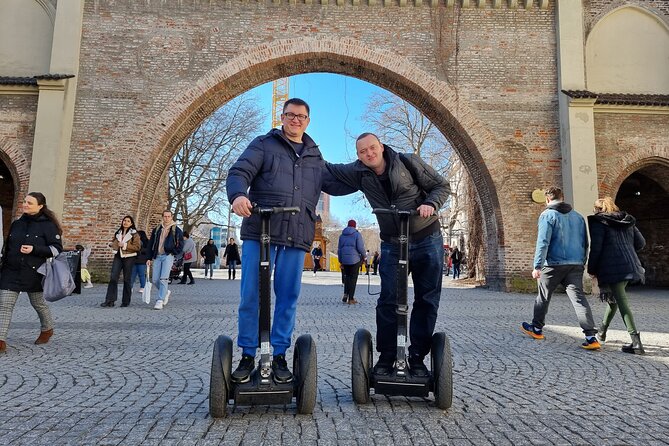
Schelling-Salon appears among the historical stops, followed by a reference to the White Rose. The tour therefore includes not only the people who built the Nazi regime but also those who resisted it.
That balance matters. A tour about this period should not present Munich only as Hitler’s city. The White Rose connection brings attention to opposition and moral courage, giving the route a wider human frame.
The supplied details do not specify how long the group stops at each of these places or what exact presentation the guide gives. You should treat them as part of a connected overview rather than separate, in-depth lessons. Still, their presence makes the route more thoughtful than a simple parade of Nazi buildings.
If you are taking the tour with teenagers, this section may help them understand that history is not only about powerful leaders. The experience can also raise questions about who resisted, why the resistance failed, and what choices people faced.
Haus der Kunst and the Angel of Peace
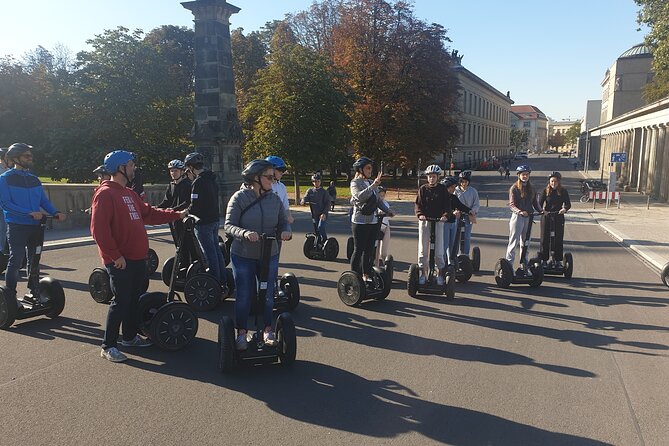
Haus der Kunst and the Angel of Peace widen the route beyond strictly political headquarters. They show how the tour connects public art, city identity, and the spaces chosen to represent Munich.
The Angel of Peace is also a useful visual change after the more somber Nazi-era sites. You get a different part of the city and a reminder that Munich’s public monuments carry several layers of meaning.
The route does not promise entry into Haus der Kunst or any other museum. If you want to see interiors, plan a separate visit. The value here is the guide’s explanation and the ability to connect several distant parts of central Munich in one morning.
This mix also explains why the tour may not satisfy someone expecting nonstop WWII material. Some stops concern the political period directly, while others help you understand Munich as a city being reshaped and presented to the public.
Hitler’s Munich apartments and the Hofbräukeller
The route includes Hitler’s apartment from 1933, his earlier apartment from 1920 to 1929, and the Hofbräukeller. These stops add a personal and social layer to the political story.
The two apartment references help trace different stages of Hitler’s life in Munich. The earlier address relates to his years before power, while the 1933 apartment belongs to the period when his political position had changed dramatically.
The Hofbräukeller connects the story to Munich’s beer hall culture. The tour also visits Hofbräuhaus, giving you two well-known names in a city where beer halls played a major role in public life and political gatherings.
I would not expect every address to be visually dramatic. Some historical locations are ordinary-looking places, and the meaning comes from what happened there rather than from what you see today. That is precisely why a guide helps.
One caution: the route may pass through commercial or shopping areas between major historical stops. One rider felt that this weakened the WWII focus. I think that is fair criticism, especially if you booked the tour expecting every minute to center on wartime history.
Maximilianeum, Maximilianestrasse, and the city’s grand scale
The Maximilianeum and Maximilianestrasse add a broader look at Munich’s political and architectural identity. These places help show the city beyond the Nazi period, while still fitting the tour’s larger question: how did leaders imagine and use Munich?
This part of the ride is also where the Segway earns its keep. Walking from one end of the central route to another would take more time and energy. Riding lets you see more of the city without turning the morning into a test of endurance.
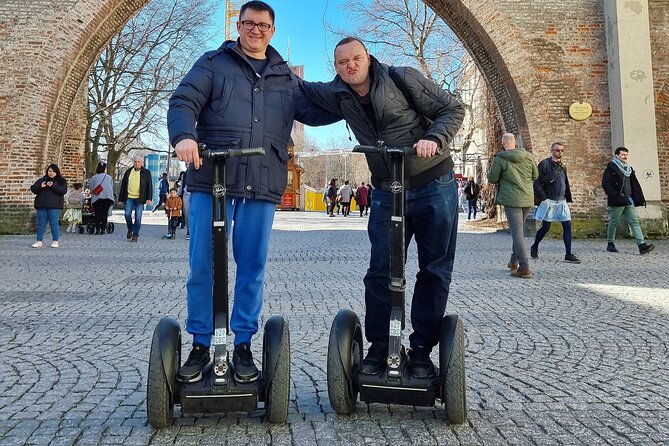
You will also have chances to take pictures. Karl received special praise for picture-taking, and other riders appreciated having time to stop rather than being hurried from one point to the next. That small service can make a difference when you want a record of the day without asking strangers at every stop.
The Residenz and Odeonsplatz finish
The Residenz München and Odeonsplatz bring the route back toward Munich’s grand historic center. These locations help place the Nazi story within the much longer history of Bavaria and the city’s rulers.
Odeonsplatz is especially important to the story because the failed Beer Hall Putsch is one of the questions this tour sets out to explain. The guide can connect the event to Hitler’s early attempt to gain power and to the later development of the Nazi movement.
The tour ends back at Artur-Kutscher-Platz rather than leaving you across town. That is convenient for planning, although the return route means you should not expect the final stop to be the end point.
Guide quality can make or break the morning
The strongest praise is directed at the guides. Karl is described as friendly, well informed, patient with questions, and helpful with photographs. Josef is praised for a very good explanation of Munich and its history. Claudia handled an imperfect day well when another guide did not arrive, and Rawen tailored the experience to the group’s interests.
I would book this tour for the guide-led experience rather than for the Segway alone. The machines make the route fun, but the explanations give the morning its purpose.
There was also a scheduling problem when one guide failed to appear, leaving the day less organized. That does not appear to be the usual experience, but it shows why group size and guide availability matter. A well-run group should feel relaxed. A stretched guide may have less time for questions and individual help.
Price, value, and who should book
At $82.82 per person, this is not the cheapest way to see Munich. The value comes from combining a three-hour city tour, Segway use, historical commentary, and a route that reaches more sites than a typical walking outing.
I think the price is reasonable if you want one active overview and do not plan to study each building in depth. It is less appealing if you mainly want museum admission, interior access, or a tightly focused WWII lecture. The tour includes no listed admission charge, so you are paying for the guide, equipment, and route rather than entry to attractions.
Families with older children and teenagers may get a lot from it. A 17-year-old and a 14-year-old reportedly enjoyed the ride, and the format can hold attention better than a long walk. Couples who want to see more in less time are also a good match.
You should be comfortable taking part in an outdoor activity for about three hours. Most people can participate, but the experience is not a passive bus ride. Wear warm clothes on cold days, because wind and movement make the temperature feel lower.
Booking ahead is sensible. The experience is often reserved about 36 days in advance, and the group has a maximum of 20 people. You receive confirmation at booking, and free cancellation is available until 24 hours before the start time. Cancellations or changes inside that 24-hour window are not refunded or accepted.
Should you book the Munich Third Reich and WWII Segway Tour?
Book it if you want a lively first look at Nazi-era Munich, enjoy riding, and prefer seeing many locations rather than spending a long time inside one museum. The route covers major names and places, and a strong guide can add real context to each stop.
Skip it if you want a purely WWII-focused experience, dislike outdoor riding, or need detailed interior visits. Also think twice on a very cold day unless you are ready to bundle up.
For most couples and families with teenagers, this is a smart way to get oriented. I would treat it as a well-paced introduction, then add a museum or longer historical visit if the subject catches your interest.
FAQ
How long does the Munich Third Reich and WWII Segway Tour last?
The tour lasts approximately three hours.
Where does the tour start?
It starts at Artur-Kutscher-Platz 2A, 80802 Munich, Germany.
What time does the tour begin?
The stated start time is 10:00 a.m.
Where does the tour finish?
The tour ends back at the same meeting point.
Is the tour offered in English?
Yes. The experience is offered in English.
What places are included on the route?
The route includes Königsplatz, the Führerbau, Braunes Haus, Schelling-Salon, the White Rose reference point, Haus der Kunst, the Angel of Peace, Hitler’s two listed Munich apartments, Hofbräukeller, Maximilianeum, Maximilianestrasse, Hofbräuhaus, the Residenz München, and Odeonsplatz.
How many people can join the tour?
The maximum group size is 20 people.
Can most people participate?
The tour information says most participants can take part.
Is public transportation available near the meeting point?
Yes. The meeting point is near public transportation.
Can I cancel for a full refund?
Yes, if you cancel at least 24 hours before the experience start time. Cancellations made less than 24 hours before the start are not refunded.
Just added around Munich
- Munich’s Highlights 3-hour Segway Tour★ 5.0 · 76 reviews
- Segway tour Munich Beer Stories (3h)★ 5.0 · 3 reviews
- Beer Testing Segway Tour in Munich★ 3.5 · 2 reviews
- Munich 2-Hour Segway Tour★ 5.0 · 15 reviews
- Segway Tour Munich Old Town 3 hours★ 4.5 · 10 reviews
- 2-Hour Segway Discovery Munich Night Tour★ 5.0 · 2 reviews
- 2-Hour Segway Discovery Tour Munich★ 5.0 · 20 reviews
- Munich Classic City Segway Tour (English or German Guide)★ 5.0 · 65 reviews
Munich Segway Tours, compared.
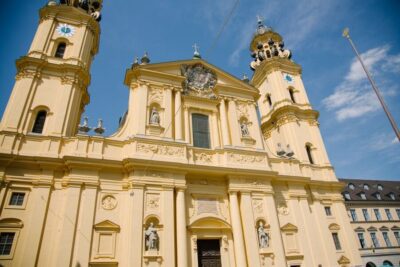
Munich 3-Hour Segway Tour: Nazi Munich & Royal Architecture
Read our review →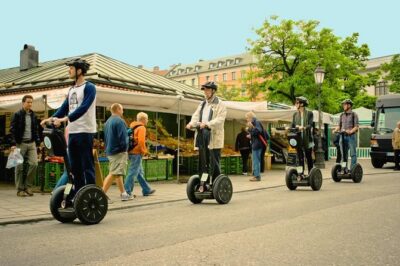

Munich Classic City Segway Tour (English or German Guide)
Read our review →
Third Reich and World War II Segway Tour of the City
Read our review →

Browse the lists this tour appears in